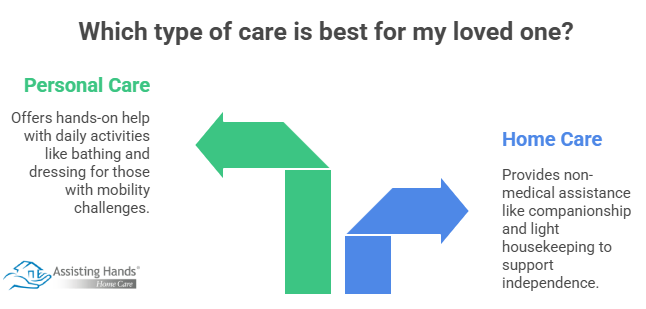
Home care and personal care are often used interchangeably, but they provide different types of support. Home care generally refers to nonmedical assistance that helps seniors or individuals remain safely at home, such as companionship, meal preparation, light housekeeping, and transportation. Personal care, on the other hand, focuses on hands-on help with daily activities like bathing, dressing, grooming, and mobility. In short, home care supports overall daily living, while personal care specifically addresses physical and personal needs.
What Is Home Care?
Home care is nonmedical assistance that helps seniors and individuals manage daily living in the comfort of their own homes. It’s especially beneficial for people who value independence but may need a little extra help with routine tasks.
Examples of home care services include:
- Companionship and conversation
- Light housekeeping and laundry
- Meal planning and preparation
- Medication reminders (not administration)
- Transportation to appointments or errands
- Assistance with hobbies, reading, or activities
Many families in Florida choose Home Care Fort Lauderdale to ensure their loved ones have the right level of support without leaving the comfort of their homes. Caregivers provide not just practical assistance but also emotional connection, which reduces feelings of loneliness.
What Is Personal Care?
Personal care goes a step further by providing hands-on assistance with activities of daily living (ADLs). This level of care is often necessary for seniors with mobility challenges, chronic illnesses, or cognitive conditions such as Alzheimer’s or dementia.
Examples of personal care services include:
- Bathing and showering assistance
- Help with dressing and grooming
- Mobility support and transfers (bed to wheelchair, etc.)
- Incontinence care or assistance with using the toilet
- Feeding assistance for those who cannot eat independently
- Monitoring safety and preventing falls
Unlike general home care, personal care Fort Lauderdale requires caregivers to be trained in safely supporting physical needs. These services are essential for individuals who cannot complete personal hygiene or mobility activities without help.
Key Differences Between Home Care and Personal Care
While the terms are sometimes used interchangeably, there are clear differences:
| Aspect | Home Care | Personal Care |
|---|---|---|
| Type of Assistance | Nonmedical support (companionship, housekeeping, errands) | Hands-on support with personal hygiene and daily living |
| Who Provides Care? | Caregivers or companions | Caregivers with training in ADL assistance |
| Level of Need | Suitable for those who are mostly independent | Designed for individuals needing more physical support |
| Focus | Comfort, independence, and companionship | Safety, hygiene, and physical wellbeing |
| Typical Duration | A few hours a day or weekly visits | Regular, often daily care for ongoing needs |
Who Needs Home Care?
Home care is ideal for:
- Seniors who live alone and need companionship
- Individuals recovering from surgery who need help with meals or errands
- Adults who are independent but need light support with household chores
- Families who want peace of mind that their loved one isn’t isolated
Some clients also begin with hourly home care Fort Lauderdale, which provides flexible support for just a few hours a day, making it easier for families to schedule assistance when it’s needed most.
Who Needs Personal Care?
Personal care is a better choice for:
- Seniors with limited mobility or at risk of falling
- Individuals with dementia or Alzheimer’s who need supervision
- Adults with disabilities requiring daily physical assistance
- Loved ones who need help with bathing, grooming, or toileting
- Patients recovering from serious illness who require ongoing hands-on care
Personal care ensures not only that basic hygiene needs are met but also that safety is maintained, preventing risks such as falls or infections.
Can Home Care and Personal Care Be Combined?
Yes. In fact, many families choose to combine both. For example, a caregiver may assist with bathing (personal care) and then prepare a meal and provide companionship afterward (home care).
This blended approach allows for a customized care plan that adapts as needs change. Someone who begins with hourly support may eventually require 24-hour care Fort Lauderdale, ensuring constant supervision and assistance throughout the day and night.
Choosing the Right Type of Care
The decision between home care and personal care depends on your loved one’s specific needs. Ask yourself:
- Does your loved one mainly need companionship and help around the house? (home care)
- Does your loved one face challenges with bathing, grooming, or mobility? (personal care)
- Does your loved one need a combination of both? (home care + personal care)
It’s always best to consult with a trusted home care agency. Care Managers can evaluate needs and create a customized plan that balances independence with safety.
The difference between home care and personal care lies in the type of support provided. Home care offers companionship and help with household tasks, while personal care provides hands-on assistance with personal hygiene and daily activities. Both services play a vital role in allowing seniors and individuals with health challenges to live with dignity at home.
Whether your loved one needs occasional help, hourly support, or continuous 24-hour care, understanding these distinctions will guide you toward the right choice and give your family peace of mind.
Frequently Asked Questions
What are the two types of personal care?
+
The two main types of personal care are assistance with personal hygiene (such as bathing, grooming, and toileting) and support with mobility and daily activities (like dressing, eating, and transferring). Both ensure safety, dignity, and independence at home.
Who can benefit from home care services?+
Home care is ideal for seniors or individuals who need help with household tasks, medication reminders, or social interaction but don’t require hands-on physical assistance.
Is personal care only for the elderly?+
No, personal care can benefit anyone who needs assistance with daily living activities due to age, illness, injury, or disability—regardless of age.
What is personal care also known as?+
Personal care is also known as custodial care or nonmedical care, since it involves hands-on assistance with daily living tasks like bathing, grooming, dressing, and mobility rather than medical treatments.
How do I decide which type of care is right for my loved one?+
The best way to determine the appropriate care is through a professional assessment of your loved one’s physical, emotional, and daily living needs. This can help you identify whether your loved one requires home care, personal care, or a combination of both.