Choosing the right caregiver for an aging loved one can be overwhelming, especially with multiple acronyms such as PCA, HHA, CNA, and GNA. Each role serves a unique purpose in home care and elder care, ranging from basic daily support to specialized medical assistance. Knowing the differences helps families ensure their loved ones receive proper care while maintaining safety, independence, and comfort. Personal care assistants (PCAs) focus on daily activities, home health aides (HHAs) provide additional medical support, certified nursing assistants (CNAs) perform clinical tasks, and geriatric nursing assistants (GNAs) specialize in elderly care in long-term or nursing home settings.
What Is a Personal Care Assistant (PCA)?
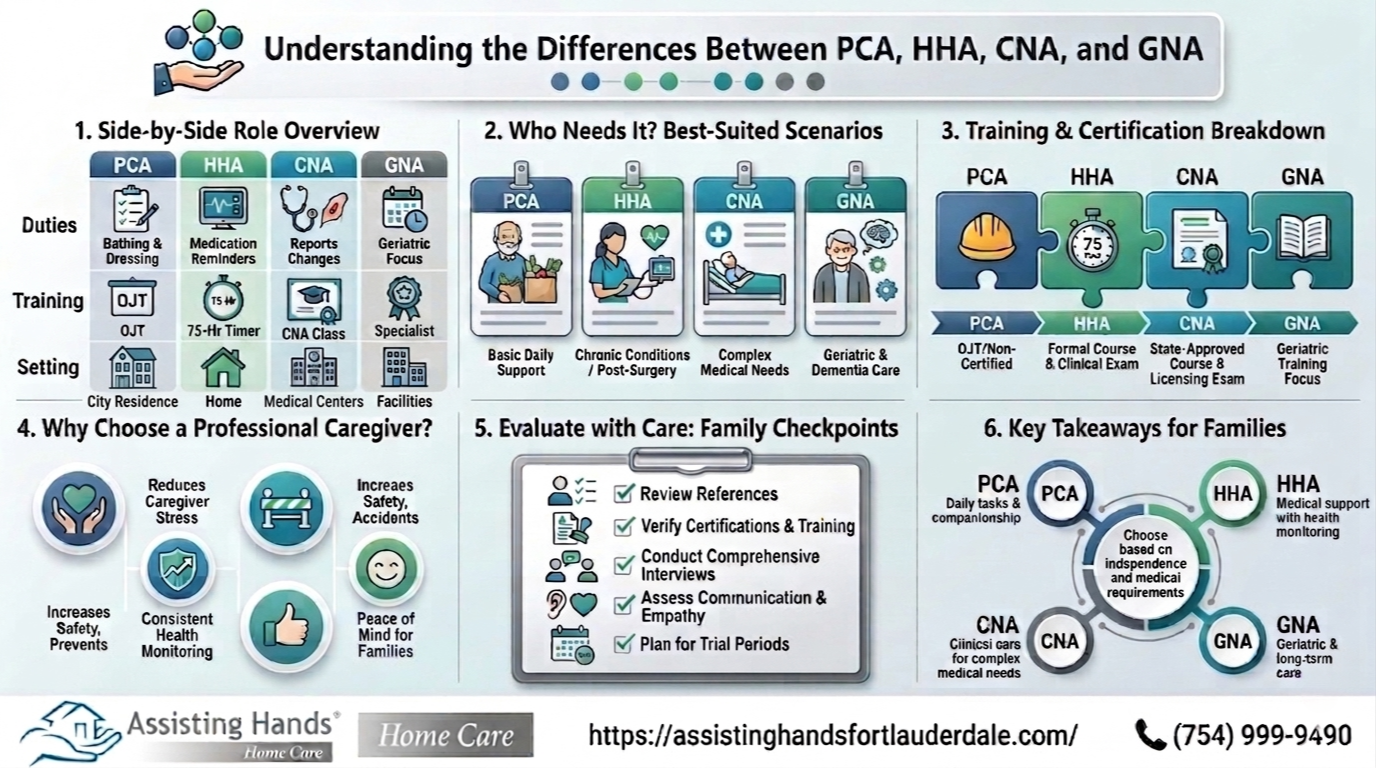
A personal care assistant (PCA) is ideal for individuals who need help with daily living tasks but don’t require medical supervision. They assist with activities of daily living (ADLs) such as bathing, dressing, eating, and grooming, as well as instrumental activities of daily living (IADLs) like cooking, light housekeeping, shopping, and medication reminders. Many families rely on PCAs to enhance their senior loved ones’ quality of life through Home Care Fort Lauderdale services, which provide both companionship and essential daily support while maintaining independence. PCAs are generally trained on the job and may not need formal certification, making them a flexible option for seniors who require basic support.
What Is a Home Health Aide (HHA)?
Home health aides (HHAs) provide both personal care and basic medical assistance, making them suitable for seniors with chronic conditions such as Alzheimer’s, Parkinson’s, or recovery needs after surgery. HHAs complete formal training programs, typically around 75 hours, covering educational and clinical components, including supervised exams. Their duties often include monitoring vital signs, assisting with medication under supervision, personal hygiene support, meal preparation, and light household tasks. HHAs work mainly in private homes, assisted living, and day programs, offering professional care for individuals who require more than just companionship or basic daily assistance.
What Is a Certified Nursing Assistant (CNA)?
Certified nursing assistants (CNAs) are medically trained professionals who provide direct patient care under the supervision of registered or licensed practical nurses. CNAs perform duties such as monitoring vital signs, assisting with feeding, transferring patients, dressing wounds, and reporting changes in health conditions. Families often rely on 24-hour care Fort Lauderdale to ensure consistent supervision and medical support, especially for seniors with complex health needs requiring immediate attention. CNAs must complete state-approved training programs and pass a certification exam, qualifying them to work in hospitals, rehabilitation centers, and skilled nursing facilities.
What Is a Geriatric Nursing Assistant (GNA)?
Geriatric nursing assistants (GNAs) specialize in elderly care, focusing on the unique needs of seniors in long-term care or nursing home environments. While similar to CNAs in medical knowledge, GNAs emphasize geriatric support, including mobility assistance, dementia care, fall prevention, emotional support, and personalized daily routines. They’re trained to recognize age-related health challenges and help seniors maintain dignity, independence, and quality of life. GNAs often work closely with family members and healthcare teams to implement tailored care plans, making them a critical resource in professional elder care settings.
Training and Certification Requirements
Each caregiver role requires different levels of training and certification. PCAs often receive on-the-job training and may not need formal certification, while HHAs undergo 75 hours of structured training with clinical exams. CNAs must complete state-approved courses and pass licensing exams, enabling them to perform medical tasks legally. GNAs receive specialized geriatric training, similar to CNAs but focused on elderly care needs. Understanding these requirements helps families select caregivers who are qualified, reliable, and compliant with legal standards. Proper training ensures seniors receive safe and effective care tailored to their health conditions.
Work Environments and Career Opportunities
Caregivers work in a variety of settings, depending on their training and responsibilities. PCAs mainly serve in private homes or community programs, assisting with daily tasks. HHAs work in homes, assisted living, and day programs, providing both personal and medical support. CNAs are found in hospitals, rehabilitation centers, nursing homes, and private homes, handling more medical responsibilities. GNAs are primarily employed in long-term care facilities or nursing homes, where they provide specialized elderly care. Knowing the work environment of each role helps families find caregivers suited to the senior’s location, health needs, and care intensity.
Benefits of Hiring a Professional Caregiver
Hiring trained caregivers ensures seniors receive consistent support for daily activities and health needs. PCAs provide companionship and basic assistance, while HHAs offer medical support alongside personal care. CNAs deliver clinical supervision, and GNAs provide specialized geriatric attention, including dementia care and mobility assistance. Professional caregivers also reduce caregiver stress, increase safety, prevent accidents, and enhance seniors’ overall quality of life. Families gain peace of mind knowing trained professionals are monitoring their loved ones’ health conditions and assisting with essential daily routines.
Tips for Families to Evaluate Caregivers
Families should carefully assess potential caregivers before hiring. Check certifications, verify training, and review references. Conduct interviews to understand experience, communication skills, and approach to senior care. Consider trial periods to observe interactions with your loved one. Evaluate the caregiver’s ability to handle emergencies, follow care plans, and provide emotional support. Proper evaluation ensures your loved one receives high-quality care while maintaining safety, dignity, and comfort.
Comparing PCA, HHA, CNA, and GNA
| Role | Scope of Duties | Medical Training | Typical Work Environment | Best Suited For |
| PCA | Daily living tasks, light housekeeping, companionship | On-the-job training, no formal certification | Private homes, community care | Seniors needing basic support and independence |
| HHA | ADLs + basic medical support, medication reminders | 75-hour formal training | Private homes, assisted living, day programs | Seniors with chronic conditions or post-surgery care |
| CNA | ADLs + clinical care, vital signs, wound care | State-certified, formal clinical training | Hospitals, rehab, nursing homes, private homes | Seniors with complex medical needs requiring supervision |
| GNA | ADLs, specialized elderly care, dementia care, mobility assistance | Geriatric-focused training, similar to CNA | Nursing homes, long-term care facilities | Elderly individuals needing geriatric-focused daily care |
Choosing the Right Caregiver
Selecting the right caregiver depends on the senior’s health, level of independence, and specific care needs. Families should consider the complexity of care required, daily activity support, and emotional or cognitive conditions such as dementia. Understanding these roles helps families choose the most appropriate personal care Fort Lauderdale services, whether it’s basic daily assistance, medical supervision, or specialized geriatric care. For light assistance and companionship, a PCA or homemaker may be sufficient. Seniors requiring medical oversight or post-surgery recovery benefit from HHAs or CNAs. When specialized elderly care is essential, particularly in long-term care or dementia support, GNAs provide targeted attention.
Key Takeaways for Families and Caregivers
- PCAs assist with daily living tasks and basic companionship for independent seniors.
- HHAs provide additional medical support, including basic health monitoring and medication reminders.
- CNAs deliver clinical care under nurse supervision, suitable for seniors with complex health needs.
- GNAs specialize in geriatric care, dementia support, and long-term elderly assistance.
- Choose a caregiver based on your loved one’s independence, medical needs, and emotional support requirements.
- Combining roles may be beneficial. For instance, hiring an HHA for medical support alongside a PCA for household tasks.
- Ensure caregivers are trained, certified, and experienced for the specific level of care required.
Frequently Asked Questions
What is the main difference between a PCA and an HHA?
+
PCAs assist with daily activities and companionship, while HHAs provide both personal care and basic medical support under training and supervision.
Can a CNA work in a home environment?+
Yes, CNAs can provide in-home care, but they’re most commonly employed in hospitals, rehabilitation centers, and skilled nursing facilities.
What makes a GNA different from a CNA?+
GNAs specialize in geriatric care, focusing on elderly-specific needs such as dementia support, fall prevention, and emotional wellbeing.
How do I choose the right caregiver for my loved one?+
Consider your loved one’s health, independence level, medical requirements, and emotional support needs. The right role may involve one or multiple caregivers.
Do HHAs or CNAs require formal training?+
Yes, HHAs undergo 75-hour training, while CNAs require state certification and clinical exams to provide medical care.