
Approaching a senior loved one living with dementia requires patience, understanding, and mindfulness. Individuals with dementia often experience confusion, memory loss, and heightened sensitivity to unexpected interactions, which can lead to startling or agitation. A gentle approach can help you create a sense of safety, trust, and emotional reassurance. By understanding your loved one’s needs and behaviors, caregivers, family members, and friends can enhance communication and interactions, making daily life more comfortable for both the loved one with dementia and those supporting him or her. Calm, consistent routines and thoughtful engagement are essential for positive outcomes.
How Home Care Supports Daily Life for Dementia Patients
Home Care Fort Lauderdale services play a vital role in providing personalized support to people living with dementia. Caregivers are trained to approach dementia patients calmly, understand their unique triggers, and implement strategies that reduce startling and agitation. Home care staff can assist with daily activities, including meal preparation, bathing, grooming, medication reminders, and mobility support, all while maintaining a safe and familiar environment. Structured routines, consistent communication, and one-on-one attention can help seniors feel secure. For Fort Lauderdale families, it ensures their loved one receives professional support, easing emotional stress while fostering dignity and independence.
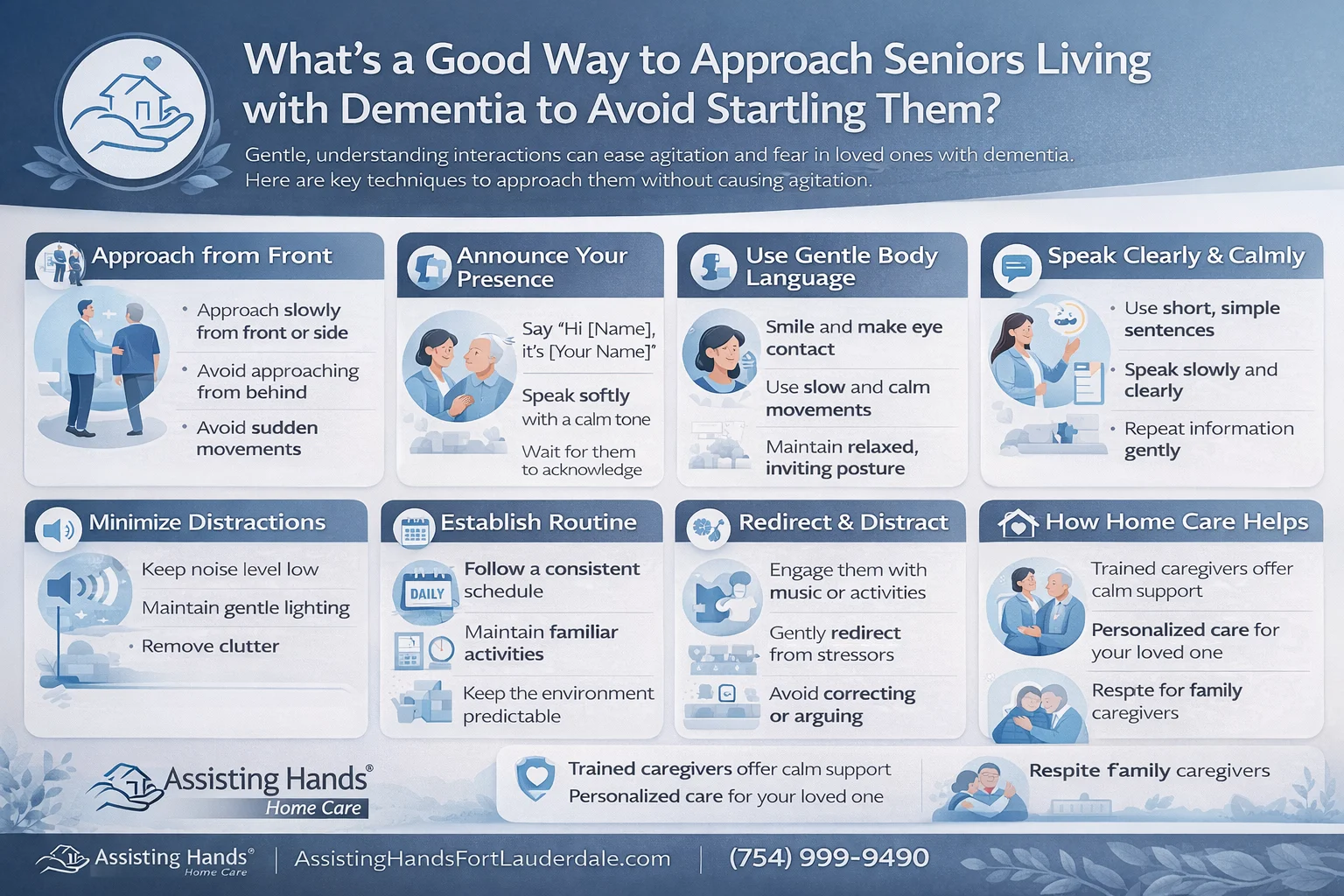
How Home Care Service Helps Seniors with Dementia
Professional home care also offers emotional support to dementia patients, ensuring their psychological and social needs are met. Caregivers can recognize early signs of distress and intervene with calming strategies to prevent startling. Through personalized interaction, they build trust and rapport, which is essential for cooperation and engagement. Home care can also help with implementing memory aids, cognitive exercises, and safe activity schedules. Families benefit from respite and guidance, increasing their confidence in providing care. Understanding the emotional impact of home care helps caregivers address both physical and emotional wellbeing.
Why Approaching Gently Matters for People Living with Dementia
Dementia care emphasizes the importance of gentle interaction to reduce fear and stress. Sudden movements, loud voices, or unexpected touch can startle someone with dementia, increasing anxiety or agitation. By approaching slowly, speaking clearly, and allowing time for processing, caregivers can create a safe and supportive environment. Using reassuring language, maintaining eye contact, and validating feelings are all key strategies. Consistent routines and familiar settings further reduce the likelihood of startling. Prioritizing high-quality dementia care ensures every interaction is client-centered, respectful, and enhances the individual’s sense of control and safety.
The Best Ways to Approach a Person with Dementia to Avoid Startling
Effective approaches include:
- Approaching from the front or side to avoid surprises
- Announcing your presence softly before touching or speaking
- Maintaining calm body language, slow gestures, and a gentle tone
- Avoiding sudden movements or loud noises
- Observing your loved one’s mood and adjusting the interaction accordingly
Choosing a dementia care provider that understands these techniques ensures interactions are safe and comforting. Regular training for caregivers also reinforces the use of calm, structured methods to reduce stress and prevent startling.
Using Clear and Calm Communication to Prevent Startled Responses
Communication is critical when interacting with a person with dementia. Using short, clear sentences, avoiding complex instructions, and repeating information gently can reduce confusion. Ask questions that can be answered simply and give your loved one time to respond. A calm voice, steady pace, and positive reinforcement can enhance understanding. Avoiding corrections or arguments encourages cooperation. Techniques like using your loved one’s name, explaining actions before performing them, and using reassuring phrases contribute to a safe and predictable environment, minimizing the risk of startling or agitation.
Nonverbal Cues: Body Language that Soothes, Not Surprises
Nonverbal cues are powerful in dementia care. Calm gestures, relaxed posture, and smiling expressions communicate safety. Avoid sudden hand movements or looming over your loved one, as these can be misinterpreted as threats. Sitting at eye level, using gentle touch when appropriate, and maintaining an inviting posture fosters trust. Facial expressions and tone of voice should match the intended message. Through careful observation, you can detect discomfort or agitation early, enabling timely interventions. Nonverbal communication supports verbal strategies and strengthens the overall approach to reducing startling and stress.
The Role of Environment in Reducing Startling and Agitation
A supportive environment plays a crucial role in dementia care. Minimizing noise, reducing clutter, and using familiar objects can make your love one feel secure. Proper lighting, comfortable seating, and safe pathways prevent accidents and lower anxiety. Engaging in activities with a companion enhances social connection and emotional support. Companionship offers reassurance, reduces isolation, and helps in managing stress triggers. Consistency in environmental cues and daily schedules promotes confidence and predictability, reducing startling incidents. Learn more about the importance of companionship in dementia care.
Maintaining Routine and Familiarity to Ease Interactions
Establishing predictable routines helps dementia patients feel safe. Regular mealtimes, consistent waking and sleeping schedules, and familiar activities reduce anxiety.
- Consistent daily schedule for meals and medications
- Familiar household items and environment
- Regular recreational or memory-based activities
- Predictable caregiver interactions
- Clear labeling of rooms or items for orientation
Routine reduces confusion and stress, making interactions smoother. By maintaining familiar surroundings and schedules, you can prevent startling reactions and create an environment of trust and comfort.
Validation and Respect: How They Reduce Anxiety and Startling
Validating your loved one’s feelings and experiences, even if they’re based on memory loss or confusion, can reduce stress. Respectful communication, patience, and acknowledgment of emotions promote emotional wellbeing. Avoid confrontation or correction. Instead, redirect gently and provide reassurance. Validating statements like “I understand you feel that way” or “Let’s do this together” foster cooperation and minimize agitation. Emotional support strengthens relationships and enhances safety, making daily care routines easier and preventing startling events.
Identifying and Minimizing Startling Triggers
| Care Level | Typical Hours Allowed | Best Use Case |
| Light assistance | 4–8 hours weekly | Errands, appointments |
| Moderate supervision | 10–20 hours weekly | Routine caregiver relief |
| High-dependency care | 24–72 hours temporarily | Burnout prevention, recovery periods |
This structured approach allows you to anticipate triggers, implement prevention strategies, and ensure safe interaction, reducing the risk of startling and agitation.
Redirection and Distraction Techniques that Facilitate Communication
Redirection can shift your loved one’s attention from stressors or confusion. Engaging activities like music, art, simple puzzles, or conversation topics of interest can distract and calm your loved one. Gentle reminders, guiding to familiar routines, or redirecting to a favorite activity can enhance cooperation. Incorporating dementia distraction techniques ensures these strategies are safe and effective. Redirection supports emotional regulation, reduces stress, and promotes positive interactions, making communication with dementia patients smoother and less startling.
Frequently Asked Questions
1. How can I approach dementia patients without startling them?
+
Approach from the front, speak calmly, and give them time to process. Avoid sudden gestures or loud voices.
2. Why is routine important for people with dementia?+
Predictable routines reduce confusion, anxiety, and the chance of startling, making daily activities smoother.
3. Can home care help with managing dementia behaviors?+
Yes, trained caregivers provide structured support, emotional reassurance, and safe approaches to reduce stress.
4. What are simple ways to calm an agitated dementia patient?+
Use distraction, gentle touch, calm voice, and familiar activities to redirect attention and soothe agitation.
5. How does companionship benefit someone with dementia?+
Regular social interaction reduces loneliness, anxiety, and stress, boosting emotional wellbeing and cooperation.