Yoga is more than a physical exercise. It’s a gentle path toward inner peace, balance, and self-healing. For seniors, it creates a sense of calm and reconnects the mind and body, enhancing how they feel every single day. Simple poses, mindful breathing, and a few moments of quiet reflection can bring lasting joy and vitality to life.
The Healing Connection Between Yoga and Aging Gracefully
With age, the body changes, flexibility decreases, joints stiffen, and balance may become challenging. Yoga provides a soothing way to restore mobility and encourage mindfulness. Regular practice strengthens muscles, improves posture, and enhances coordination, which are essential for preventing falls and maintaining independence.
Seniors receiving at Home Care Fort Lauderdale services can easily integrate yoga into their daily routines with gentle guidance. Caregivers can help with breathing exercises, simple poses, and mindfulness techniques that suit each individual’s physical capacity.
Enhancing Emotional Health Through Mindful Movement
Yoga’s benefits go far beyond flexibility. For many seniors, it serves as a source of emotional release and mental rejuvenation. The slow, rhythmic breathing and focus during each pose reduce anxiety and promote relaxation, helping seniors feel more centered and positive.
Group or one-on-one yoga sessions can also reduce loneliness and enhance emotional connections. Even five to ten minutes of deep breathing daily can significantly lower stress and boost mood naturally.
Supporting Caregiver Balance with Respite Options
While yoga promotes self-care for seniors, it’s equally important for family caregivers to recharge. Providing constant support can be demanding, often leading to fatigue or burnout, which is why respite care Fort Lauderdale becomes so valuable. It offers families short-term relief while ensuring their loved ones continue receiving personalized attention and support.
During this time, caregivers can focus on their well-being, maybe even joining a yoga session themselves to restore energy, mindfulness, and patience. This balance benefits both the caregiver and the senior, creating a more nurturing environment overall.
Boosting Cognitive Health Through Gentle Practice
For older adults, maintaining mental sharpness is just as important as physical strength. Yoga enhances cognitive functions like focus, memory, and decision-making by increasing blood flow to the brain and promoting relaxation. It also reduces stress hormones that contribute to mental fatigue or forgetfulness.
For seniors living with memory challenges, incorporating simple chair yoga or breathing exercises into dementia care Fort Lauderdale routines can support brain health and promote emotional calm. These gentle practices encourage mindfulness and help seniors feel more present, boosting day-to-day mental clarity.
Strengthening the Body and Preventing Falls
Yoga’s low-impact poses gently stretch and strengthen the body, increasing balance and enhancing muscle tone. Seniors who practice yoga regularly often experience better mobility, reduced joint pain, and increased stability. Simple movements like seated stretches, standing poses, or supported balance exercises can make a big difference.
Consistent practice also helps with joint lubrication and circulation, easing discomfort from arthritis or stiffness. With time, seniors notice increased confidence in movement and less fear of falling, promoting independence and vitality.
Encouraging Rest and Recovery with 24-Hour Support
Sometimes, seniors need continuous supervision or medical attention while staying active and engaged. Families can rely on 24-hour care services to ensure around-the-clock comfort and safety.
Caregivers can incorporate light yoga or stretching into daily routines, helping seniors maintain physical health even with advanced care needs. This continuous support ensures physical activity remains safe, effective, and personalized to every individual’s abilities.
Common Yoga Styles Suitable for Seniors
| Yoga Type | Description | Primary Benefits for Seniors |
| Chair Yoga | Performed while sitting or holding a chair | Enhances balance and flexibility |
| Hatha Yoga | Focuses on slow, controlled poses | Improves posture and relaxation |
| Restorative Yoga | Gentle stretches with long holds | Promotes deep relaxation and healing |
| Yin Yoga | Targets connective tissues | Increases joint mobility |
| Pranayama | Breathing-based yoga practice | Increases focus and reduces stress |
How to Get Started Safely
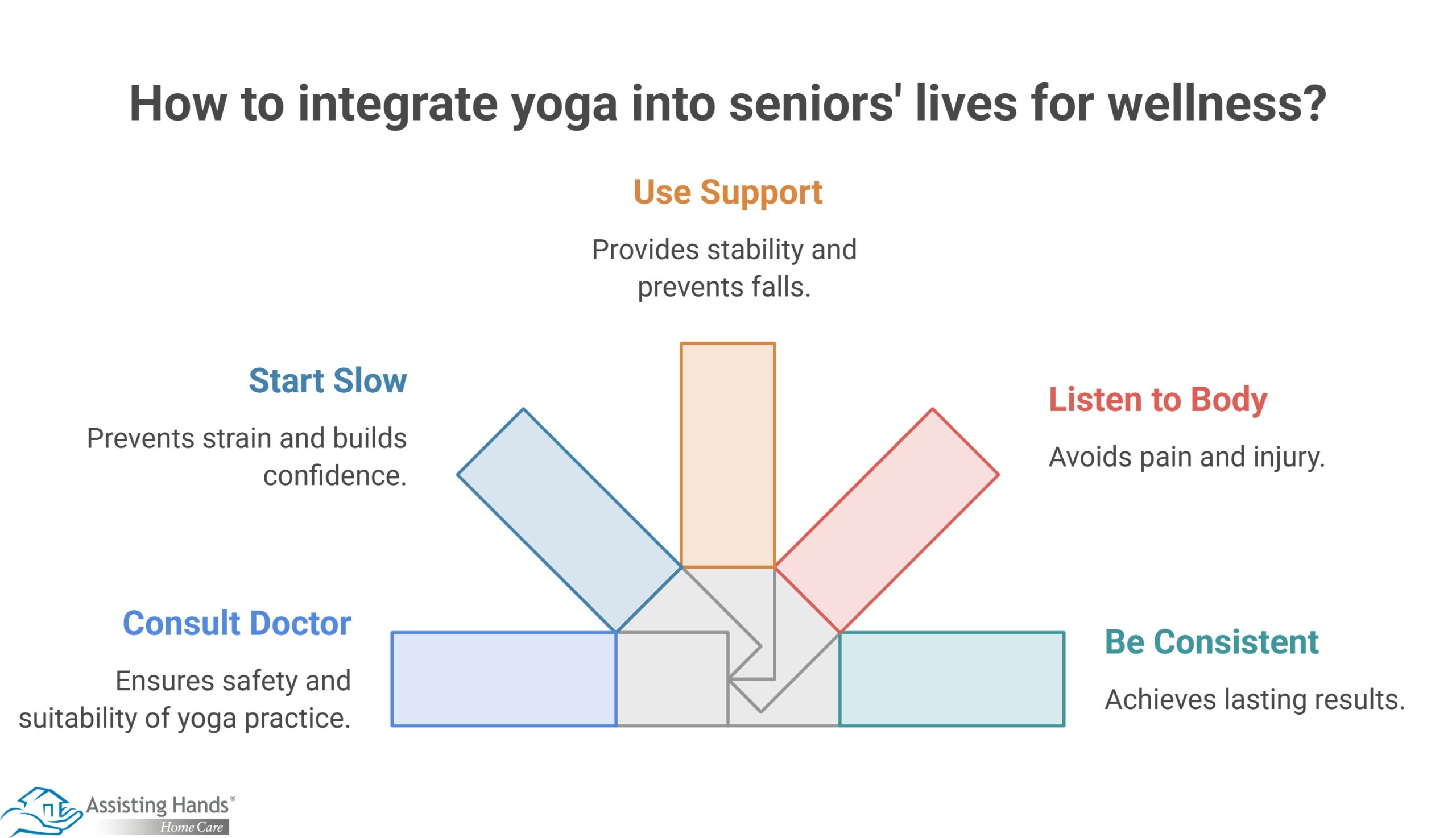
- Consult your doctor – Always check with a healthcare provider before starting yoga.
- Start slow – Begin with easy poses and focus on breathing rather than the depth of the stretch.
- Use support – A wall, chair, or yoga block can prevent strain.
- Listen to your body – Pain is a signal to stop and adjust.
- Be consistent – Practicing a few minutes daily builds lasting results.
These small yet consistent steps lead to better flexibility, mood, and overall well-being.
Frequently Asked Questions
Is yoga safe for seniors with limited mobility?
+
Yes. Yoga can be modified with seated or supported positions, allowing seniors of all mobility levels to participate safely and comfortably.
How often should seniors practice yoga for noticeable benefits?+
Practicing yoga 3–4 times per week can boost flexibility, balance, and mood. Even short sessions make a difference over time.
Can yoga help with dementia or memory loss?+
Gentle yoga supports mental clarity and relaxation, reducing anxiety and increasing focus for seniors experiencing cognitive decline.
What type of yoga is best for beginners?+
Chair yoga and restorative yoga are ideal starting points for seniors, focusing on gentle movement, breathing, and stretching.
How can caregivers assist seniors with yoga practice?+
Caregivers can ensure safety, provide physical support, and help seniors follow guided sessions, making the experience both calming and beneficial.