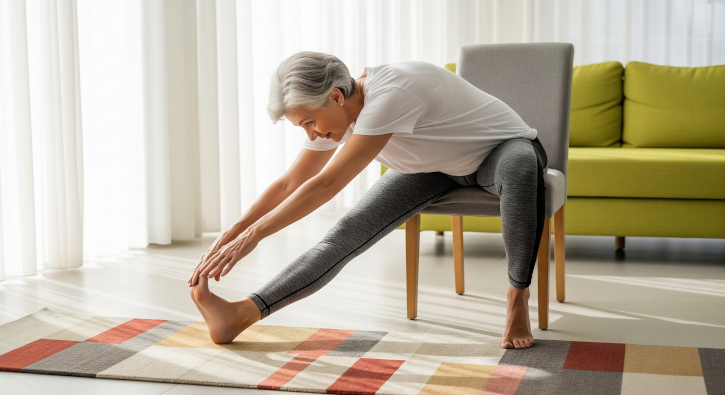
Maintaining physical independence becomes harder with age, but limited mobility doesn’t mean seniors have to stop moving entirely. The best exercises for aging adults with mobility limitations include seated strength training, chair-based leg exercises, gentle stretching, and water-based activities. These low-impact movements increase circulation, maintain muscle strength, enhance flexibility, and support independence while reducing strain on joints and minimizing the risk of injury.
How Can Seated Upper Body Exercises Help Seniors Maintain Strength?
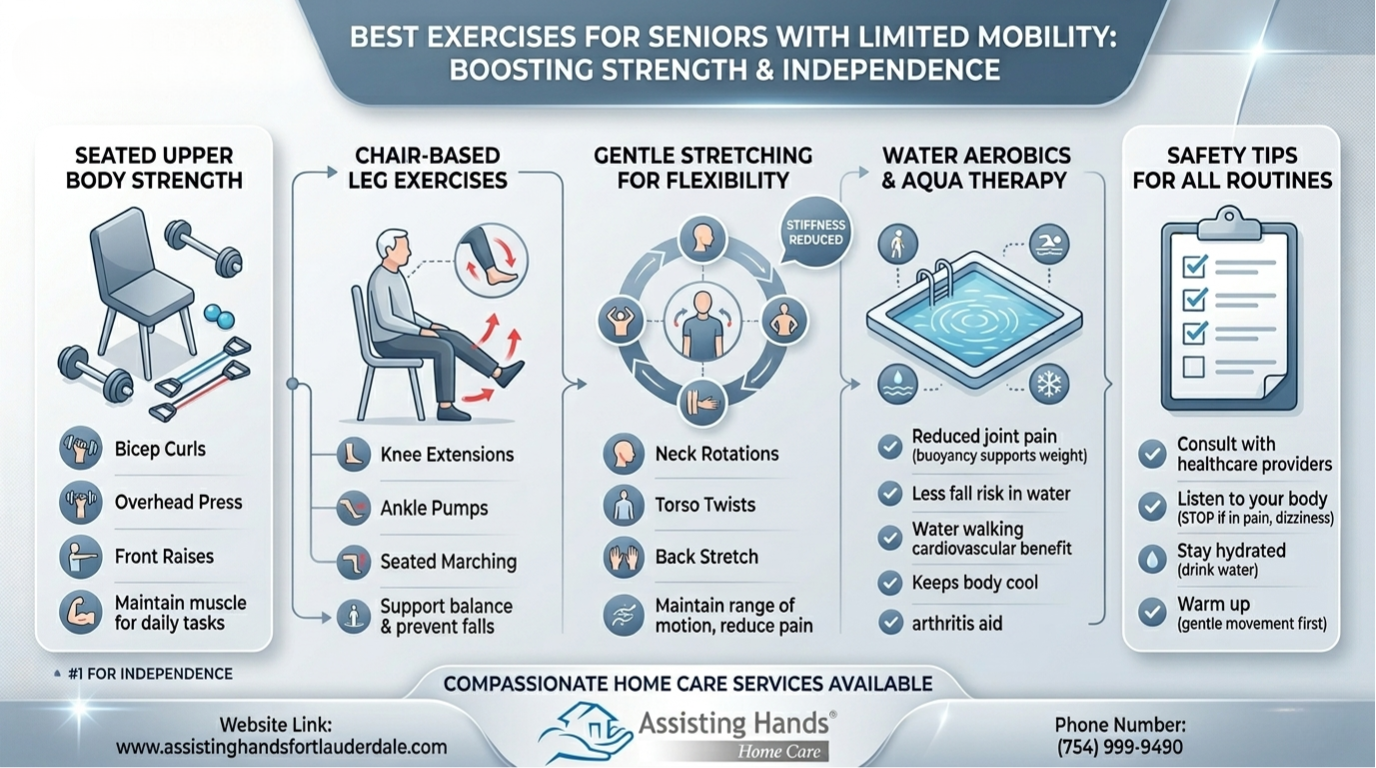
For seniors who have difficulty standing for long periods or rely on wheelchairs, seated exercises are a fantastic way to maintain upper body strength. Keeping the arms, shoulders, and back strong is essential for daily tasks like lifting groceries, dressing, or pushing a wheelchair. You don’t need expensive equipment for these movements. Light dumbbells, resistance bands, or even canned goods from the pantry work perfectly.
Try incorporating these movements into a routine:
- Bicep curls – Sit with your back straight and hold a light weight in each hand with palms facing forward. Slowly bend your elbows to lift the weights toward your shoulders, then lower them back down with control.
- Overhead press – Start with your hands at shoulder height with elbows bent. Push the weights up toward the ceiling until your arms are fully extended, then slowly return to the starting position.
- Front raises – With arms straight down at your sides, lift the weights in front of you until they reach shoulder height, then lower them slowly.
Some seniors need a bit of help to exercise safely. Home Care Fort Lauderdale experts are available to provide high-quality care to seniors on an as-needed basis. From assistance with mobility and exercise to providing transportation to the doctor’s office and social events, there are a variety of ways professional caregivers can help your aging loved one continue to live independently.
What Chair-Based Leg Exercises Support Balance and Stability?
Leg strength is vital for balance and stability, which prevent falls. Even if walking is difficult, you can still target the muscles in your legs and hips while seated in a sturdy chair. These exercises focus on the quadriceps, hamstrings, and calves, which are the primary muscles used for transferring from a bed to a chair or standing up.
Focus on these key movements:
- Knee extensions – Sit with your feet flat on the floor. Slowly straighten one leg out in front of you until it’s parallel to the floor, hold for a few seconds while squeezing the thigh muscle, and lower it back down. Repeat with the other leg.
- Ankle pumps – Extend your legs slightly and flex your feet, pointing your toes toward the ceiling and then away from you. This simple motion increases blood flow and reduces swelling in the lower legs.
- Seated marching – While sitting tall, lift one knee as high as comfortable, lower it, and then lift the other, mimicking a marching motion. This engages the hip flexors and gets the heart rate up slightly.
Why Is Gentle Stretching Important for Flexibility?
Stiffness in the joints can exacerbate mobility issues and increase pain levels. Regular stretching helps you maintain range of motion, making it easier to look over a shoulder or reach for an item on a shelf. Stretching should always be done gently. The goal is to feel a slight tension, never pain.
Effective stretches include:
- Neck rotations – Slowly turn your head to the right, looking over your shoulder, hold for ten seconds, then repeat on the left side. You can also gently tilt your ear toward your shoulder to stretch the side of the neck.
- Torso twists – Cross your arms over your chest. Keep your hips facing forward and gently turn your upper body to the right, hold, and then turn to the left. This keeps the spine mobile.
- Back stretch – Interlace your fingers and push your hands forward, rounding your upper back and shoulders. You should feel a stretch between your shoulder blades.
How Can Water Aerobics and Aqua Therapy Benefit Seniors with Joint Pain?
For those who find land-based exercises painful due to arthritis or joint issues, water aerobics is an excellent alternative. The buoyancy of the water supports body weight, reducing the impact on knees, hips, and the spine while providing natural resistance to build muscle. Many community centers offer classes specifically designed for seniors with limited mobility.
Benefits of water exercise include:
- Reduced fall risk – The water provides a safe environment where the fear of falling is minimized, allowing for greater confidence in movement.
- Cooling effect – The water keeps the body temperature regulated, preventing overheating during exertion.
- Water walking – Simply walking across the shallow end of a pool can provide a great cardiovascular workout with significantly less joint stress than walking on pavement.
Joint pain can make it especially difficult for some aging adults to navigate their environments safely. If your senior loved one needs hourly or 24-hour home care Fort Lauderdale families can trust, Assisting Hands Home Care can help. Our caregivers can assist with exercise and mobility, prepare nutritious meals, provide timely medication reminders, and help with a wide array of other important daily tasks.
What Safety Tips Should Seniors Follow before Starting New Exercise Routines?
Before starting any new exercise regimen, safety must be the top priority. Seniors with limited mobility should always consult with healthcare providers or physical therapists to determine which movements are safe for their specific condition.
Keep these guidelines in mind:
- Listen to your body – Exercise should require effort, but it should never cause sharp pain. If you experience dizziness, shortness of breath, or chest pain, stop immediately and seek medical attention.
- Stay hydrated – Drink plenty of water before, during, and after exercise, even if the activity doesn’t feel strenuous.
- Warm up – Spend five minutes doing gentle movements to get the blood flowing before attempting resistance exercises.
A trained caregiver with experience in caring for seniors with mobility limitations can be a fantastic resource for family members, especially during the nighttime hours. At Assisting Hands Home Care, our Fort Lauderdale overnight home care services address a full range of needs, including personal care, mobility assistance, toileting, and repositioning. Caregivers also provide fall prevention monitoring, medical equipment support, and emotional reassurance for clients who experience nighttime anxiety or disorientation. Services are available on an occasional or ongoing basis and can be coordinated with flexible hourly daytime care for continuous around-the-clock support. Reach out to us at Assisting Hands Home Care if you need compassionate professional care for your loved one. Call one of our dedicated Care Specialists today to learn about the high quality of our in-home care services.
Frequently Asked Questions
Why is exercise important for individuals receiving home care?
+
Regular exercise can increase mobility, reduce the risk of falls, and enhance overall physical and mental health.
Can home care services support physical therapy exercises?
+
Yes, caregivers can help individuals follow prescribed physical therapy routines to aid in recovery and maintain progress.
Is exercise assistance tailored to individual needs?
+
Absolutely, exercise plans are customized based on the individual’s physical abilities, health conditions, and personal goals.
What types of exercises can caregivers help with?
+
Caregivers can assist with gentle stretching, walking, balance exercises, and other activities recommended by healthcare professionals.
Can home care services include help with exercise?
+
Yes, many home care providers assist with light exercise routines to promote mobility, strength, and overall wellbeing.