Preparing for a loved one’s transition to a memory care facility involves open communication, personalizing the new living space, collaborating with care staff, and planning move-in logistics carefully.
Moving an aging family member to memory care is an emotionally complex journey that requires careful logistical and psychological preparation. While guilt and anxiety are common reactions during this time, taking structured steps can significantly ease the transition for both you and your loved one.
Why Is Communication Important when Transitioning to Memory Care?
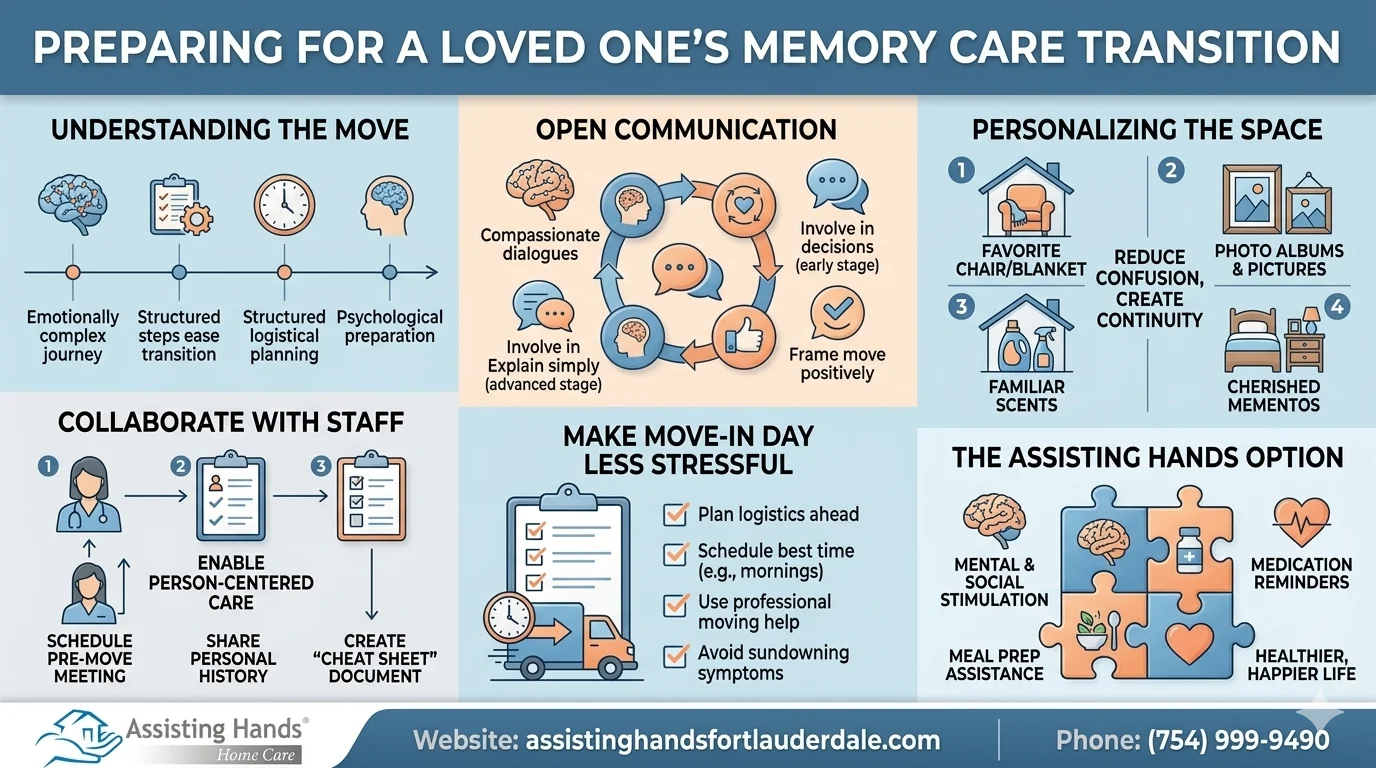
Clear and compassionate communication can reduce fear and confusion during the transition. Transparency is crucial when approaching a move to memory care, though the level of detail should depend on your loved one’s current cognitive abilities. If your loved one is in the earlier stages of dementia, involve him or her in the decision-making process as much as possible. Discuss preferences for activities, room setup, and daily routines.
However, if the condition is more advanced, simpler explanations are often more effective. Avoid overwhelming your loved one with dates or complex reasons. Instead, frame the move as a positive step toward receiving better help with daily tasks or staying in a place where your loved one will be safe and comfortable. Listen to your loved one’s fears without dismissing them, validating his or her feelings while gently redirecting focus to the supportive aspects of the new environment.
Many seniors prefer aging in place over moving to assisted living facilities. If your senior loved one needs assistance to remain safe and comfortable while living at home, reach out to Assisting Hands Home Care, a leading Fort Lauderdale Home Care agency. Our dedicated in-home caregivers can assist with meal prep, bathing and grooming, exercise, medication reminders, and many other important tasks.
Why Is It Important to Personalize the New Space?
Personalizing the new space can significantly reduce confusion and emotional distress. A sterile, unfamiliar room can increase confusion and agitation for someone with memory loss. To make the facility feel like home, plan ahead to decorate the space with familiar items before your loved one arrives. The goal is to create a sense of continuity and comfort.
Consider bringing:
- A favorite chair or blanket – Tactile familiarity can be very soothing.
- Photo albums and framed pictures – Images of family, friends, and pets can anchor your loved one to his or her identity.
- Familiar scents – If your loved one always used a specific laundry detergent or room spray, try to replicate that smell.
- Cherished mementos – Small knickknacks or religious items that have sat on your loved one’s bedside table for years should move with him or her.
Recreating the layout of your loved one’s previous bedroom—placing the nightstand on the same side of the bed or positioning the TV similarly—can also reduce disorientation during the first few nights.
Why Should Families Collaborate Closely with Staff?
Sharing personal information about your loved one allows caregivers to provide more personalized care. The care team at the facility will be your partners in this new chapter. Before move-in day, schedule a time to share your loved one’s detailed personal history. Medical records are important, but personal details are what help staff provide compassionate, person-centered care.
Create a “cheat sheet” or a “Get to Know Me” document for the staff that includes:
- Preferred name – Does your loved one go by a nickname or a middle name?
- Daily routine – Is your loved one an early riser? Does he or she prefer showers in the morning or evening?
- Triggers and soothers – What upsets your loved one (e.g., loud noises, dark rooms)? What calms him or her down (e.g., soft music, a specific snack)?
- Likes and dislikes – What are your loved one’s favorite foods, hobbies, or music genres?
Providing this context allows caregivers to connect with your loved one on a human level immediately rather than learning these details through trial and error.
If your loved one wants to age in place as long as possible instead of moving to a memory care facility, consider hiring a professional live-in caregiver. When researching agencies that provide the essential live-in care Fort Lauderdale seniors need, families are usually looking for flexible care plans, compassionate and highly trained caregivers, and 24/7 availability. Whether you need respite care to take a break from your caregiving duties or your senior loved one needs around-the-clock assistance at home, you can rely on Assisting Hands Home Care.
How Can You Make Move-In Day Less Stressful?
Planning the logistics ahead of time can reduce anxiety during the transition. Move-in day is often the most stressful part of the process. Having a solid plan can mitigate anxiety for everyone involved. Try to schedule the move for the time of day when your loved one is typically at his or her best—for many with dementia, mornings are often better than late afternoons when “sundowning” symptoms may occur.
It’s often helpful to have a third party, such as a close friend or a professional moving manager, assist with the physical logistics while you focus on providing emotional support. Once you arrive, spend some time settling your loved one in, but rely on the staff’s advice regarding departure. Prolonged goodbyes can sometimes heighten anxiety. Trust that the staff are trained to help residents engage in activities or social interactions to distract them once family members leave.
Aging in place can present a few challenges for seniors living with dementia. However, with professional dementia care that offers Fort Lauderdale families peace of mind, they can still live independently at home. Families can rely on Assisting Hands Home Care to provide their elderly loved ones with mental and social stimulation, timely medication reminders, assistance with meal prep, and much more. Our caregivers are available around the clock to help your loved one live a happier and healthier life. If your loved one needs help with the challenges of aging, call one of our compassionate Care Specialists today.
Frequently Asked Questions
What are memory care services?
+
Memory care services provide specialized support for individuals with Alzheimer’s, dementia, or other memory-related conditions in a safe and structured environment.
How is memory care different from regular senior care?
+
Memory care focuses on cognitive stimulation, safety measures, and routines tailored to individuals with memory impairments, unlike general senior care.
What activities are included in memory care programs?
+
Programs often include memory-enhancing activities, social engagement, physical exercise, and personalized care plans to support cognitive and emotional wellbeing.
Are memory care staff specially trained?
+
Yes, staff receive specialized training to understand and address the unique needs and behaviors of individuals with memory-related conditions.
Is memory care covered by insurance?
+
Coverage varies by insurance plan, but some costs may be covered by long-term care insurance, Medicaid, or other programs.