
You can find culturally sensitive in-home care by clearly identifying a senior’s cultural, linguistic, and religious needs, then choosing agencies or caregivers with proven cultural competency and matching processes. The right fit requires intentional screening, community-based referrals, and ongoing evaluation to ensure respect, comfort, and effective communication in daily care
For many aging adults, receiving care that respects their heritage, language, and traditions is just as vital as assistance with daily medical needs. Finding a caregiver who understands these nuances can significantly enhance a senior’s quality of life, fostering a deeper sense of dignity and comfort at home.
Why Is Cultural Competence Crucial in Home Care?
Cultural competence matters because it directly affects trust, emotional safety, and health outcomes for seniors receiving in-home care. Cultural competence goes beyond simply speaking the same language. It encompasses a deep understanding of a senior’s background, values, and lifestyle. When a caregiver is culturally aligned with a client, it builds trust much faster than a standard placement. This emotional safety is critical for seniors who may already feel vulnerable due to health issues or the loss of independence.
Furthermore, cultural sensitivity directly impacts health outcomes. A caregiver who understands dietary restrictions based on religion or tradition is more likely to prepare meals the senior will actually eat, maintaining his or her nutritional health. Similarly, understanding cultural norms regarding pain expression or modesty can prevent misunderstandings during bathing, dressing, or medical reporting. When communication flows smoothly and cultural taboos are respected, the senior is safer, happier, and less likely to experience isolation.
Seniors can face a variety of challenges as they age, many of which can be mitigated with the help of professional in-home caregivers who provide high-quality Home Care Fort Lauderdale. Families trust Assisting Hands Home Care to help their elderly loved ones age in place safely and comfortably.
How Do You Identify Your Loved One’s Specific Cultural Needs?
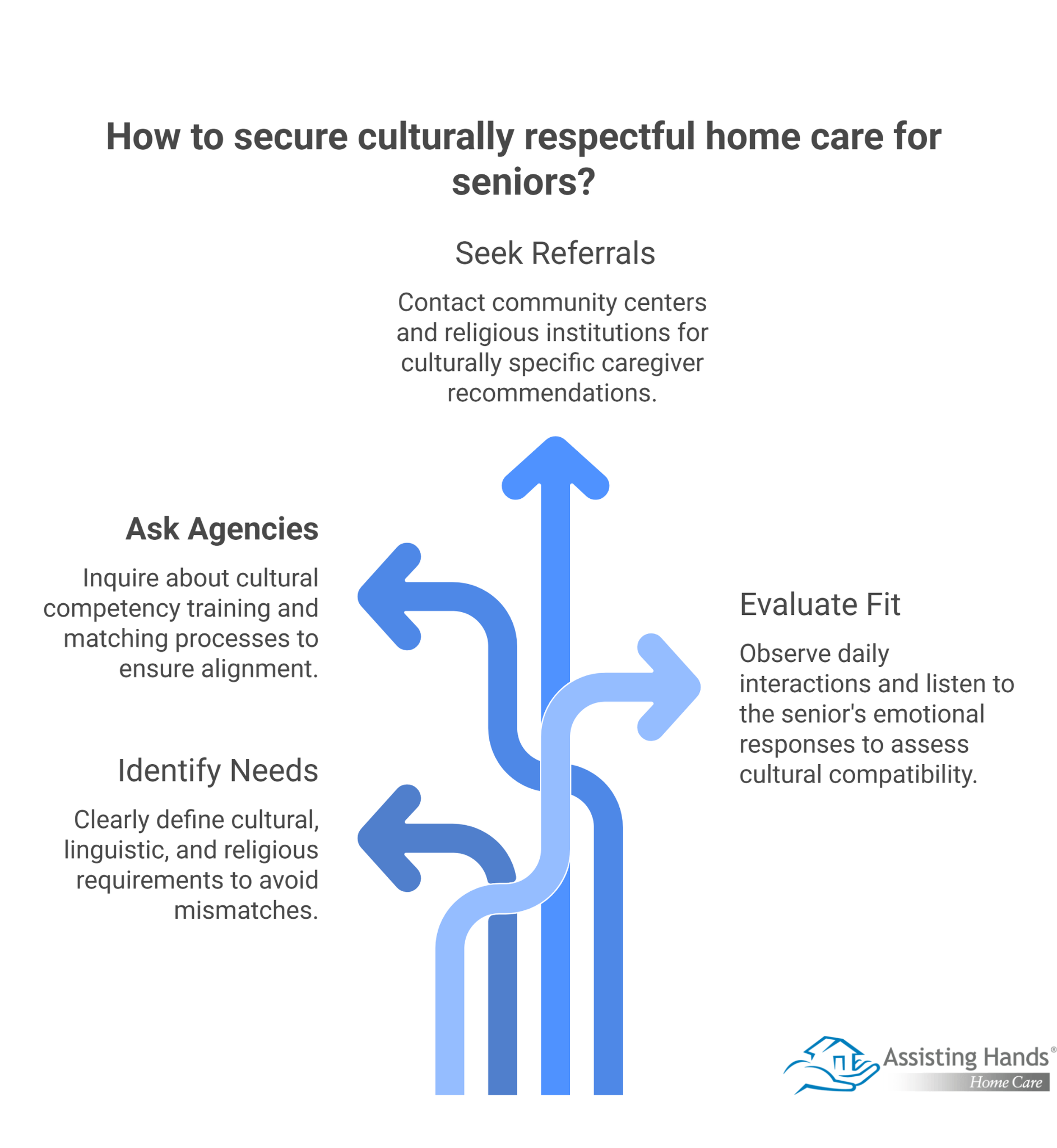
Defining cultural care needs early helps families avoid mismatches and ensures respectful daily interactions from the start. Before you begin interviewing agencies or private caregivers, sit down and create a comprehensive list of your loved one’s cultural requirements. It’s easy to overlook small daily habits that are second nature to the family but might be foreign to an outsider.
Consider the following areas when defining your needs:
- Language – Does your loved one prefer a specific dialect? Is your loved one comfortable with English for medical terms but prefers his or her native tongue for social interaction?
- Dietary preferences – Are there religious fasting rules, specific comfort foods, or culturally significant mealtime rituals?
- Religious and spiritual practices – Does your loved one need assistance with prayer, attending services, or observing holidays?
- Modesty and gender norms – Is there a strong preference for a caregiver of a specific gender due to cultural or religious modesty standards?
- Communication style – Does your loved one come from a culture where direct eye contact is rude or where elders expect a specific form of address?
What Questions Should You Ask Home Care Agencies?
Asking detailed, culturally focused questions can reveal whether an agency truly prioritizes cultural alignment. When vetting agencies, look for those that prioritize diversity and inclusion in their hiring and training processes. A generic promise of “good care” isn’t enough. You need specific evidence that they can accommodate cultural requirements.
During your initial consultation, ask these targeted questions:
- Do you have caregivers who speak [specific language] fluently?
- What kind of cultural competency training do your staff members undergo?
- How do you match caregivers to clients? Is cultural background a factor in the process?
- Can you accommodate specific food preparation requirements or religious schedules?
- What’s your policy if a caregiver accidentally offends a client due to a cultural misunderstanding?
Aging in place can present a few unique challenges for older adults. Some only require part-time assistance with exercise or meal preparation, while others are living with serious illnesses. If your elderly loved one needs around-the-clock Fort Lauderdale live-in care, turn to Assisting Hands Home Care. Our caregivers encourage seniors to focus on eating nutritious foods, exercising on a regular basis, maintaining strong social ties, and other lifestyle factors known to increase longevity.
Where Can You Find Culturally Specific Referrals?
Community-based networks often provide more culturally aligned caregiver referrals than broad online searches. Sometimes the best resources aren’t found through a general Google search but through community-specific groups. Mainstream agencies may have a diverse staff, but niche organizations often specialize in connecting families with caregivers from specific backgrounds.
Start by contacting local community centers, cultural heritage organizations, or religious institutions such as churches, mosques, or synagogues. These hubs often have bulletin boards or informal networks of people looking for caregiving work within their own communities. Additionally, word-of-mouth recommendations from friends or family members who share your cultural background can be invaluable. They can point you toward agencies that have successfully served their families or warn you away from those that were culturally tone-deaf.
How Do You Evaluate a Caregiver’s Cultural Fit?
Evaluating cultural fit requires observing daily interactions and listening closely to a senior’s emotional responses. Once a caregiver is placed in the home, the evaluation process begins. The first few weeks are critical for determining if the “cultural fit” is genuine or just on paper. Observe the interactions closely. Is the caregiver respectful of the home environment? Does the caregiver show curiosity and willingness to learn about traditions he or she might not know?
Most importantly, listen to your loved one. Even if cognitive decline is present, the emotional reaction to the caregiver is a strong indicator of success. If your loved one seems relaxed, eats well, and engages in conversation, it’s a good sign. If your loved one seems withdrawn or agitated, it may be due to a cultural disconnect. Regular check-ins with both your loved one and the caregiver can smooth out minor misunderstandings before they become major issues.
Frequently Asked Questions
What is culturally sensitive home care?
+
Culturally sensitive home care respects and incorporates a client’s cultural, religious, and linguistic preferences into the care plan to ensure comfort and understanding.
How do home care providers address cultural differences?+
Providers often train caregivers in cultural awareness and match clients with caregivers who understand or share their cultural background.
Can I request a caregiver who speaks my language?+
Yes, many home care agencies strive to accommodate language preferences to enhance communication and build trust between clients and caregivers.
Why is cultural sensitivity important in home care?+
It fosters respect, reduces misunderstandings, and ensures care aligns with the client’s values, traditions, and beliefs.
How can I ensure my loved one receives culturally appropriate care?+
Discuss your loved one’s cultural needs and preferences with the home care provider to create a personalized and respectful care plan.
Whether your elderly loved one needs part-time assistance with basic household chores or you need a break from your caregiving duties, the Fort Lauderdale respite care experts at Assisting Hands Home Care are here to help. All of our home care services are backed with a 100% satisfaction guarantee, there are no hidden fees in our contracts, and we never ask our clients to sign long-term contracts. For compassionate, reliable in-home care, trust the experienced professionals from Assisting Hands Home Care. Reach out to one of our dedicated Care Specialists today to learn about the high quality of our in-home care services.