
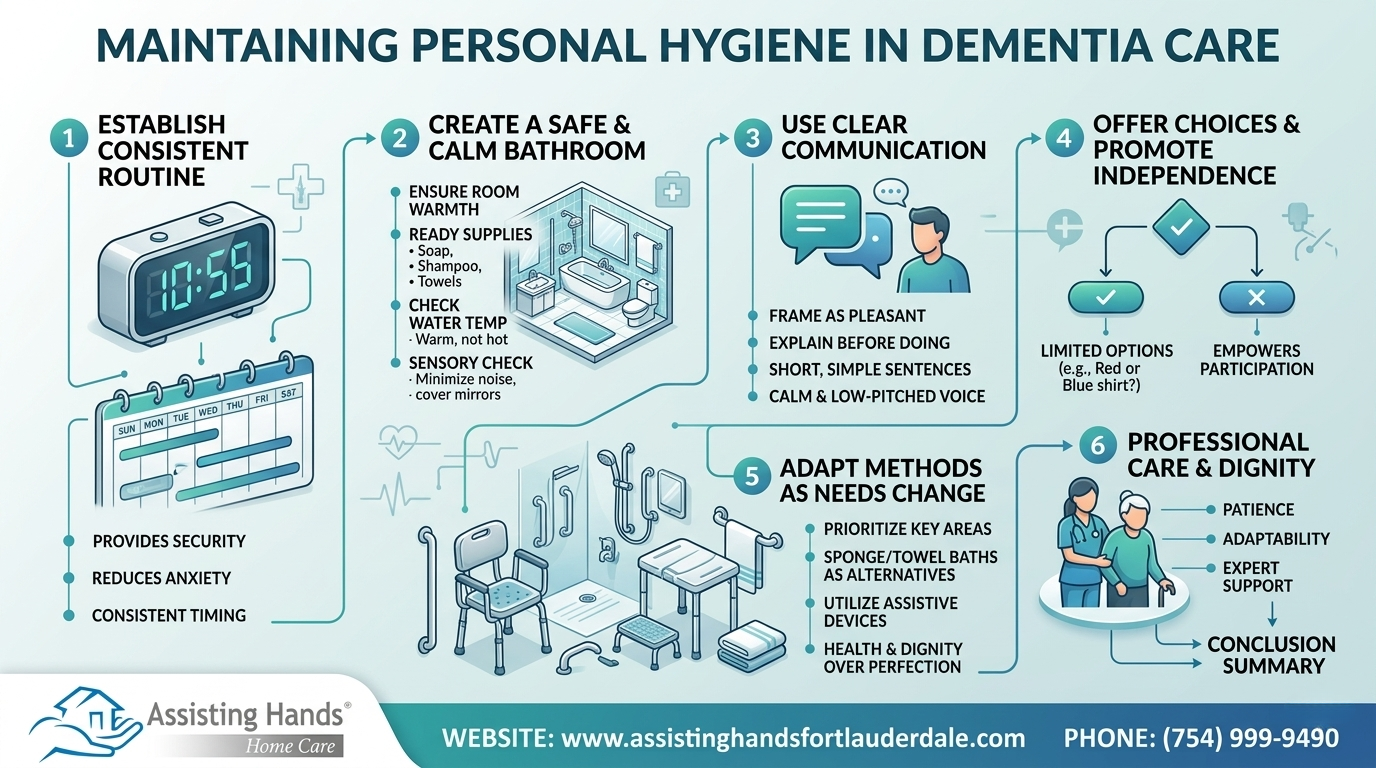
Maintaining personal hygiene for someone with dementia requires patience, consistency, and adaptability. The most effective strategies include establishing routines, creating a safe and comfortable environment, using clear communication, offering choices to promote independence, and adapting hygiene methods as needs change to ensure both health and dignity.
Caring for a senior loved one with dementia involves navigating complex challenges, with personal hygiene often becoming a significant source of stress for both parties. As the disease progresses, confusion and fear can turn a simple daily routine into a challenging event, requiring caregivers to adapt their approaches with patience and empathy.
Why Does a Consistent Routine Help with Hygiene Tasks?
Routine provides a sense of security for individuals with dementia. When activities happen at the same time and in the same way every day, it reduces the cognitive load required to process what’s happening. A disruption in the schedule can cause anxiety, which often manifests as resistance or agitation during intimate tasks like bathing or grooming.
Try to schedule hygiene tasks when your loved one is typically most relaxed and agreeable. For some seniors, this might be in the morning after breakfast. For others, an evening routine might signal it’s time to wind down for bed. Once you find a time that works, stick to it. Over time, muscle memory and habit can take over, making the process smoother even as cognitive abilities decline.
If your senior loved one has been diagnosed with a serious condition and needs help with tasks like meal prep, transportation, bathing, and grooming, reach out to Assisting Hands Home Care, a leading provider of Home Care Fort Lauderdale families can trust. We also offer comprehensive care for seniors with dementia, Alzheimer’s, and Parkinson’s.
How Should You Prepare the Bathroom Environment for Safety and Comfort?
Preparation is the most critical step before the hygiene process even begins. The bathroom can be a frightening place for someone with dementia. Cold tiles, bright lights, running water, and mirrors can cause sensory overload. If a person feels cold or unsafe, the natural reaction is to resist.
Before bringing your loved one into the bathroom, ensure the space is ready:
- Warm the room – Use a space heater to ensure the air temperature is comfortable.
- Prepare supplies – Have soap, shampoo, and warm towels within arm’s reach so you never have to leave your loved one’s side.
- Check the water – Ensure the water temperature is warm, not hot, and turn the water on before your loved one enters the room if the sound of rushing water causes anxiety.
- Remove mirrors – If your loved one doesn’t recognize his or her reflection, a mirror can be terrifying. Cover it with a towel if necessary.
In addition to assistance with personal hygiene, a professional caregiver can help your parent with a variety of daily tasks. Whether you need respite from your caregiving duties or your aging loved one needs Fort Lauderdale live-in care, Assisting Hands Home Care can meet your family’s care needs. Our dedicated caregivers are available around the clock to provide transportation to doctor’s appointments, ensure seniors take their prescribed medications, and help with a variety of tasks in and outside the home.
What Communication Techniques Reduce Resistance during Hygiene Care?
How you speak about hygiene matters just as much as the physical act of cleaning. Telling your loved one “It’s time for your bath” can sound like a command and trigger a refusal. Instead, frame the activity as a pleasant experience or a necessary step toward something else your loved one enjoys. You might say “Let’s get freshened up so we can have your afternoon snack.”
During the process, explain what you’re doing before you do it to avoid startling your loved one. Use short, simple sentences and a calm, low-pitched voice. If your loved one becomes agitated, stop and reassure him or her. Changing the subject or singing a favorite song may distract your loved one enough to continue.
How Can Offering Choices Promote Independence during Hygiene Care?
As dementia progresses, individuals lose control over many aspects of their lives. This loss of autonomy can lead to stubbornness as they try to assert control over the few things they can. Giving your loved one small manageable choices during hygiene routines can help him or her feel empowered and less like things are being done to him or her.
However, avoid open-ended questions, which can be overwhelming. Instead, offer limited options:
- “Would you like to wear the blue shirt or the red shirt?”
- “Do you want to wash your face or your hands first?”
- “Would you like a bath or a shower today?”
By allowing your loved one to participate in the decision-making process, you turn the activity into a collaboration rather than a battle of wills.
How Should Hygiene Methods Be Adapted as Needs Change?
There may come a point where a full shower or bath is simply too traumatic or physically difficult. It’s important to remember a daily full-body wash isn’t always medically necessary for good health. Adjusting your expectations and methods can save you both a lot of distress.
Consider alternatives that achieve the same goal without the stress of a traditional shower:
- Sponge baths – Washing different parts of the body while your loved one is sitting in a comfortable chair or lying in bed can be just as effective.
- Towel baths – Use large, warm, damp towels to clean the body while keeping your loved one covered and warm.
- Assistive devices – Utilize shower chairs, hand-held showerheads, and grab bars to make the experience physically easier and less frightening.
Prioritize the critical areas—face, hands, underarms, and private areas—and worry less about a comprehensive scrub if your loved one is highly agitated. The goal is to maintain health and dignity, not to achieve perfection.
Frequently Asked Questions
How can dementia home care services assist with personal hygiene?
Caregivers can provide gentle reminders, hands-on assistance, and create routines to help individuals maintain their hygiene with dignity.
What if my loved one resists bathing or grooming?
Caregivers use patience, reassurance, and creative approaches to make hygiene tasks less stressful and more comfortable.
Can caregivers help with oral hygiene for individuals with dementia?
Yes, caregivers can assist with brushing, flossing, and ensuring regular dental care to maintain oral health.
How do caregivers ensure safety during hygiene routines?
Caregivers can take precautions like using nonslip mats, monitoring water temperature, and providing steady support to prevent accidents.
What role do caregivers play in maintaining a sense of dignity during hygiene care?
Caregivers prioritize respect, privacy, and clear communication to ensure individuals feel comfortable and valued during hygiene routines.
Caring for seniors with dementia can be challenging for family caregivers. Luckily, there is dementia care Fort Lauderdale families can rely on. Professional dementia caregivers help seniors with dementia stay safe and comfortable at home by preventing wandering, providing cognitive stimulation, and assisting with household chores. Call Assisting Hands Home Care to learn more about our flexible and customizable senior care plans.