
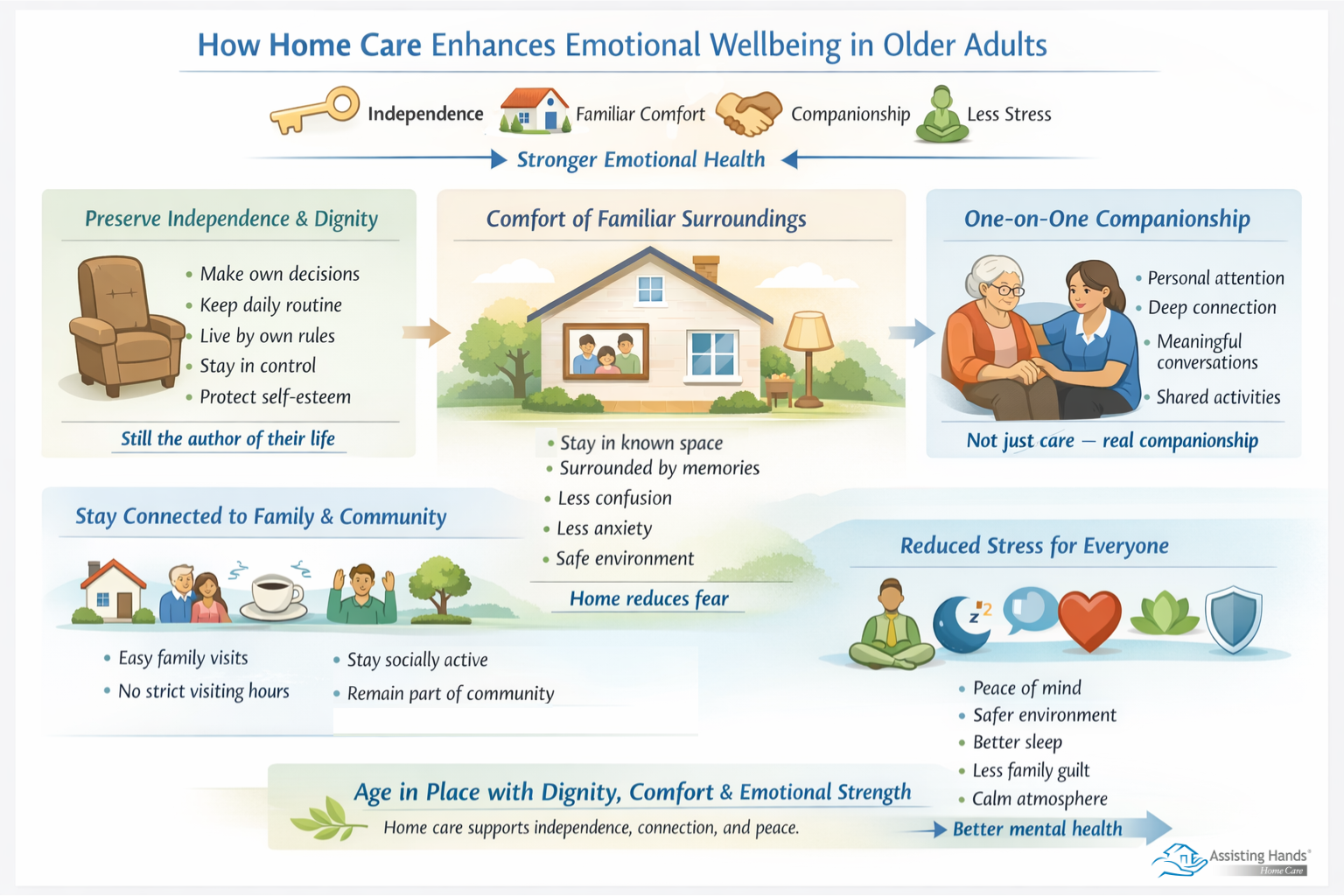
In-home care offers seniors emotional benefits by preserving independence, maintaining familiar routines, strengthening companionship, and reducing stress for both the senior and family. These factors work together to support dignity, stability, and overall emotional wellbeing while aging in place.
As our senior loved ones age, deciding on the best care option becomes a priority not just for their physical health but for their emotional wellbeing too. While nursing homes and assisted living facilities offer structured support, in-home care provides a unique set of emotional advantages that can significantly enhance a senior’s quality of life. By enabling seniors to age in place, families can foster a sense of independence, comfort, and emotional stability that’s hard to replicate in institutional settings.
How Does In-Home Care Help Seniors Preserve Independence and Dignity?
One of the most significant emotional benefits of in-home care is the preservation of independence. For many seniors, moving to assisted living or nursing facilities signals a loss of control over their daily lives. In contrast, receiving care at home allows them to maintain their routines, make their own decisions, and live by their own rules.
This autonomy is crucial for self-esteem. Being able to decide when to eat breakfast, sit in a favorite chair, or simply look out a familiar window reinforces a sense of self. It sends a powerful message that although they may need assistance, they’re still the authors of their own lives.
Living independently is important for seniors who want to maintain a high quality of life. For some, this simply means receiving help with tasks that have become more challenging to manage over time. Even when families have the best intentions, they may not have the time to provide the care their elderly loved ones need and deserve. If your loved one needs help for a few hours a day or a few days a week, reach out to Assisting Hands Home Care, a trusted provider of respite care Fort Lauderdale seniors can depend on.
Why Do Familiar Surroundings Support Emotional Stability for Seniors?
There’s truly no place like home. Our homes are repositories of memories, filled with photos, heirlooms, and the familiar sights and smells of lives well lived. For seniors, especially those living with memory issues like dementia or Alzheimer’s, this familiarity is grounding.
Staying in a known environment reduces anxiety and confusion. It eliminates the stress of adjusting to a new, often sterile, environment with strange noises and new faces. The emotional security provided by familiar surroundings acts as a buffer against depression and loneliness, creating a safe harbor where seniors feel truly at ease.
Aging in place can present a few challenges for seniors living with dementia. However, with professional dementia care that offers Fort Lauderdale families peace of mind, they can still live independently at home. Families can rely on Assisting Hands Home Care to provide their elderly loved ones with mental and social stimulation, timely medication reminders, assistance with meal prep, and much more. Our caregivers are available around the clock to help your loved one live a happier and healthier life.
How Does One-on-One Care Strengthen Companionship and Connection?
In institutional settings, staff are often stretched thin, caring for multiple residents simultaneously. In-home care, however, offers one-on-one attention. This facilitates a deep, meaningful bond between the caregiver and the senior.
Caregivers often become more than just helpers. They become trusted companions. This relationship combats isolation by providing consistent social interaction. They can share stories, play games, or simply enjoy a quiet afternoon together. This personalized connection ensures the senior feels heard, valued, and understood rather than just being another client on a list.
How Does In-Home Care Help Seniors Stay Connected to Family and Community?
Moving to a facility can sometimes sever ties with a local community or make it harder for friends and family to visit spontaneously. In-home care keeps seniors integrated within their existing social networks. Neighbors can still wave hello, friends can drop by for coffee without navigating visiting hours, and family members can visit more freely.
This continuity of social life is vital for emotional health. It prevents the feeling of being “put away” and ensures the senior remains an active participant in his or her family and community life. The ability to host guests in one’s own home also empowers seniors, allowing them to continue their role as a host or matriarch/patriarch, which is often a source of great pride.
How Does In-Home Care Reduce Stress for Seniors and Their Families?
Knowing a loved one is safe, happy, and well cared for at home provides immense peace of mind for family members. This reduction in family stress often translates back to the senior. When family visits are focused on quality time rather than the logistics of facility care or the guilt often associated with moving a parent, the interactions become more positive and emotionally fulfilling.
The home environment allows for a calmer atmosphere, free from the institutional hustle and bustle. This tranquility promotes better sleep and lower stress levels, contributing to overall better emotional and mental health.
Frequently Asked Questions
What are home care services?
Home care services provide assistance with daily living activities, such as bathing, meal preparation, and medication reminders, allowing individuals to remain in the comfort of their own homes.
Who can benefit from home care services?
Home care is ideal for seniors, individuals recovering from surgery, or those with chronic illnesses or disabilities who need support with daily tasks.
Are home care services customizable?
Yes, services are tailored to meet individual needs, ranging from a few hours of assistance to 24/7 care.
How are caregivers selected?
Caregivers are carefully screened, trained, and matched to clients based on their specific needs and preferences.
Does insurance cover home care services?
Coverage depends on the type of care and your insurance plan. Some services may be covered by Medicare, Medicaid, or private insurance.
Many seniors prefer aging in place over moving to assisted living facilities. If your senior loved one needs assistance to remain safe and comfortable while living at home, reach out to Assisting Hands Home Care, a leading Home Care Fort Lauderdale agency. Our dedicated in-home caregivers can assist with meal prep, bathing and grooming, exercise, medication reminders, and many other important tasks. To learn about our premier in-home care plans and how they can help your loved one, give us a call today.