
Adult children often notice subtle changes in an aging parent’s behavior, appearance, or habits long before a formal health crisis emerges. These early signals are easy to dismiss in the moment, but recognizing them can make a meaningful difference in getting your parent the support he or she needs sooner rather than later.
What Changes in the Home Might Signal a Problem?
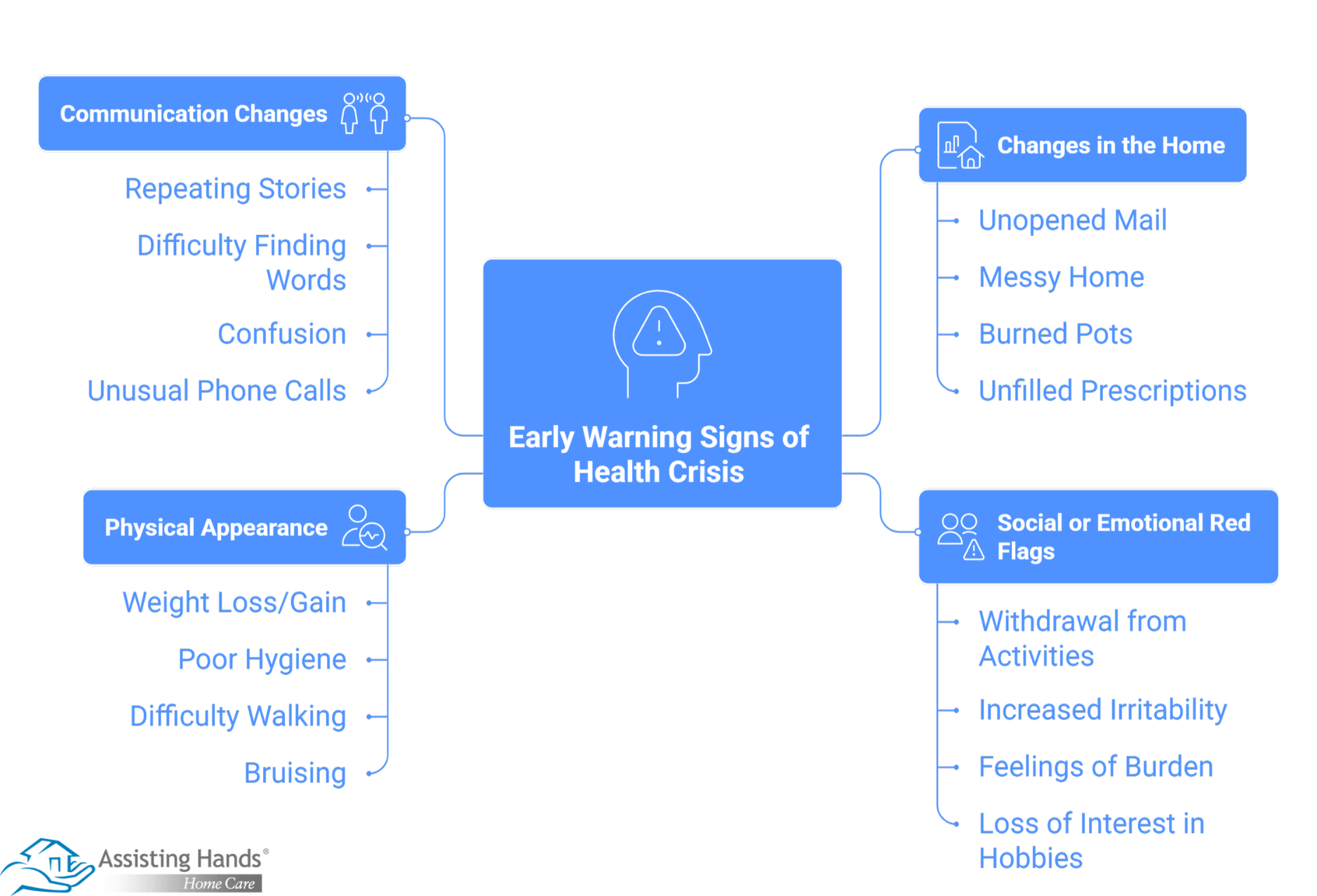
Your parent’s living space can reveal a lot about his or her current state of health. Watch for:
- Piles of unopened mail, unpaid bills, or expired food in the fridge
- A noticeably messier or dirtier home than usual
- Burned pots, broken items, or signs of minor accidents around the kitchen
- Unfilled prescriptions or medications taken incorrectly
These aren’t just signs of busyness—they can point to cognitive decline, low energy, or difficulty managing daily tasks independently.
Are There Social or Emotional Red Flags to Watch For?
Yes. Withdrawal from friends, family, and previously enjoyed activities is one of the most commonly overlooked warning signs. Specifically, look out for:
- Your parent declining invitations he or she used to accept enthusiastically
- Increased irritability, sadness, or unusual mood swings
- Expressing feelings of being a burden
- Less interest in hobbies or routines your parent once loved
These behavioral shifts can be early indicators of depression, early-stage dementia, or unmanaged chronic illness.
If your loved one has been diagnosed with dementia, compassionate professional help is just a phone call away. Aging in place can present a few challenges for seniors living with dementia. However, with professional dementia home care that offers Fort Lauderdale families peace of mind, they can still live independently at home. Families can rely on Assisting Hands Home Care to provide their elderly loved ones with mental and social stimulation, timely medication reminders, assistance with meal prep, and much more. Our caregivers are available around the clock to help your loved one live a happier and healthier life.
How Can Physical Appearance Point to Health Concerns?
Noticeable changes in how your parent looks or carries him or herself are worth paying attention to. Common physical signs include:
- Unexplained weight loss or gain
- Poor hygiene or wearing the same clothes repeatedly
- Difficulty walking, new shuffling gait, or frequent stumbling
- Bruising that suggests recent falls your parent hasn’t mentioned
Physical changes like these can reflect anything from nutritional deficiencies to neurological issues, and they often precede a more serious event like a fall or hospitalization.
Hiring professional in-home care is one of the best ways to ensure your loved ones enjoy a high quality of life. There are a variety of age-related health conditions that can make it more challenging for southeastern Florida seniors to live independently. However, many of the challenges they face can be easier to manage if their families opt for professional Fort Lauder dale Home Care. Families can rely on expertly trained caregivers to keep their loved ones safe and comfortable while aging in place.
What Communication Changes Should Raise Concern?
Shifts in how your parent communicates—both in conversations and in writing—can be telling. Signs to note include:
- Repeating the same stories or questions within a short span of time
- Having difficulty finding words or following the thread of a conversation
- Confusion about dates, recent events, or the names of familiar people
- Unusual phone calls at odd hours or forgetting recent conversations entirely
While some forgetfulness is normal with age, these patterns—especially when they escalate—may warrant a conversation with the doctor.
When Should Adult Children Take Action?
If you’ve noticed several of these signs, trust your instincts. Adult children are often the first to detect something is off, simply because they know their parent well.
- Start with a calm, private conversation—avoid accusatory language.
- Reach out to your parent’s primary care physician with your concerns, even if your parent resists.
- Consider connecting with a geriatric care manager for a professional assessment.
- Explore care options early, before a crisis forces rushed decisions.
Acting early doesn’t mean taking over—it means making sure the right support systems are in place before they’re urgently needed.
Some seniors only require help with a few daily tasks so they can maintain their independence. However, those living with serious illnesses may need more extensive assistance. Luckily, you can rely on the exceptional professional Fort Lauderdale 24-hour home care provided by Assisting Hands Home Care. Home can be a safer and more comfortable place for your loved one to live with the help of an expertly trained and dedicated around-the-clock caregiver. Call us today to learn about our comprehensive in-home care plans.
Frequently Asked Questions
What if my parent refuses help even after I’ve raised my concerns?+
This is common and can be one of the hardest parts of the process. Consulting with a geriatric care specialist or social worker can help you understand your options, including how to navigate situations where your parent’s safety is at risk but he or she is resistant to assistance.
Should I mention my concerns to my parent’s doctor without permission?
+
You can share your observations with a doctor even if your parent hasn’t consented, though the doctor may be limited in what he or she can discuss with you in return due to privacy laws. Providing written notes ahead of an appointment is a practical way to make sure your concerns are heard.
What’s the difference between normal aging and a warning sign worth addressing?
+
Normal aging involves gradual, minor changes like taking longer to recall a name. Warning signs tend to be more disruptive, progressive, or out of character, such as getting lost on a familiar route or forgetting how to use everyday appliances.
At what age should adult children start monitoring their parents’ health more closely?
+
There’s no single age, but most geriatric specialists suggest paying closer attention once a parent reaches his or her mid-to-late 70s, or sooner if he or she has existing chronic conditions or a family history of cognitive decline.
How do I bring up health concerns with an aging parent without causing conflict?
+
Choose a calm, private moment and frame the conversation around your concern for your parent rather than his or her limitations. Using “I” statements, like “I’ve noticed…” rather than “You’ve been…” can keep the conversation from feeling confrontational.