
Navigating dementia care can be challenging, and understanding your financial options is a critical step. Medicare and Medicaid offer different types of coverage for individuals with dementia, and knowing how they work can help you plan for long-term care needs.
What Dementia Care Does Medicare Cover?
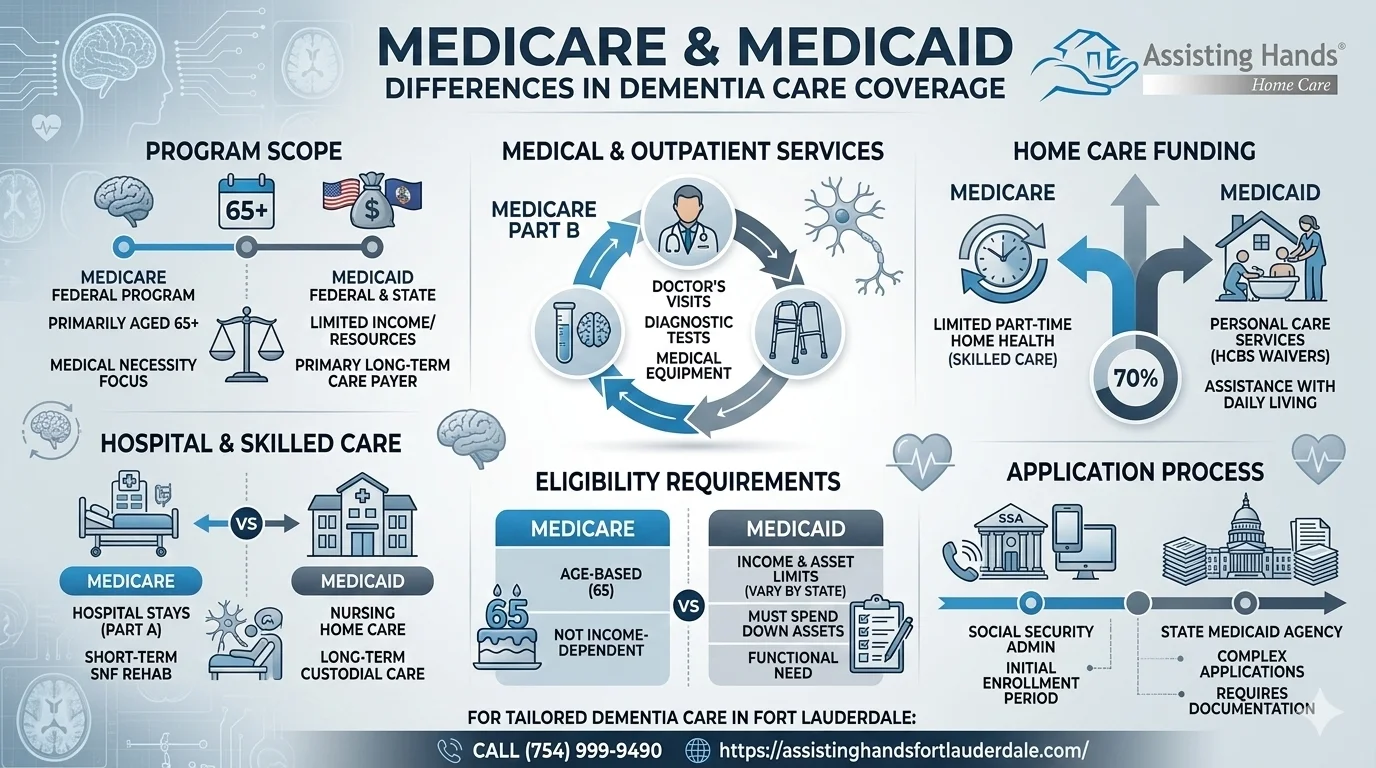
Medicare is a federal health insurance program primarily for people aged 65 or older. Its coverage for dementia care is generally limited to medically necessary services and short-term care rather than long-term custodial care.
- Hospital stays – If a person with dementia requires hospitalization, Medicare Part A will cover inpatient care.
- Skilled nursing facility (SNF) care – Medicare may cover short-term stays in an SNF for rehabilitation after a qualifying hospital stay. This isn’t intended for long-term custodial care.
- Doctor’s visits and medical services – Medicare Part B covers outpatient services, including visits to doctors, diagnostic tests, and some medical equipment. This includes appointments to diagnose and manage dementia.
- Home health care – If a person is homebound and needs skilled nursing care or therapy, Medicare may cover part-time home health services for a limited period.
- Hospice care – For individuals with end-stage dementia, Medicare provides comprehensive hospice benefits, focusing on comfort and quality of life.
The type of Home Care Fort Lauderdale seniors need can vary. Some need assistance a few hours a day, while others require more extensive around-the-clock assistance. At Assisting Hands Home Care, we tailor our care plans based on each senior’s individual care needs, and the plans can be adjusted at any time. We are a trusted provider of respite and 24-hour care, and we also offer specialized Alzheimer’s, dementia, Parkinson’s, and stroke care for seniors.
What Dementia Care Does Medicaid Cover?
Medicaid is a joint federal and state program that helps with medical costs for people with limited income and resources. It’s the primary payer for long-term dementia care in the United States.
- Nursing home care – Medicaid covers the cost of nursing home care for eligible individuals, including room, board, and nursing services.
- Home and community-based services (HCBS) – Many states offer HCBS waivers that allow eligible individuals to receive care in their own homes or communities instead of nursing facilities. Services may include personal care, adult day care, and respite care for caregivers.
- Personal care services – Medicaid can cover assistance with daily living activities, such as bathing, dressing, and eating, both at home and in residential care settings.
Certain age-related conditions can make it more challenging for older adults to age in place safely and comfortably, but experts in live-in care for Fort Lauderdale seniors are available around the clock to help aging adults manage their health. Whether your loved one is living with dementia or recovering from a stroke, you can trust the professional caregivers from Assisting Hands Home Care to enhance his or her quality of life.
What Are the Eligibility Requirements for Coverage?
Eligibility for Medicare and Medicaid differs significantly.
- Medicare eligibility – Most individuals become eligible for Medicare when they turn 65. It’s not based on income.
- Medicaid eligibility – Eligibility is determined by strict income and asset limits, which vary by state. Individuals may need to “spend down” their assets to qualify. Many states also have specific functional eligibility requirements, meaning the applicant must demonstrate a need for a certain level of care.
How Can People Apply for Medicare and Medicaid?
The application processes for these programs are different.
- Applying for Medicare – You can enroll in Medicare through the Social Security Administration’s website, by phone, or in person at a local Social Security office. Enrollment is typically done during the Initial Enrollment Period around your 65th birthday.
- Applying for Medicaid – You must apply through your state’s Medicaid agency. The application process can be complex and often requires extensive documentation of your finances and medical needs.
Caring for a loved one with dementia can be challenging, but compassionate help is available. Even when families have the best intentions, caring for a senior loved one with dementia can be challenging. Fortunately, Assisting Hands Home Care is here to help. We are a leading provider of dementia care Fort Lauderdale families can trust. You can take advantage of our flexible and customizable care plans, and our caregivers always stay up to date on the latest developments in senior care.