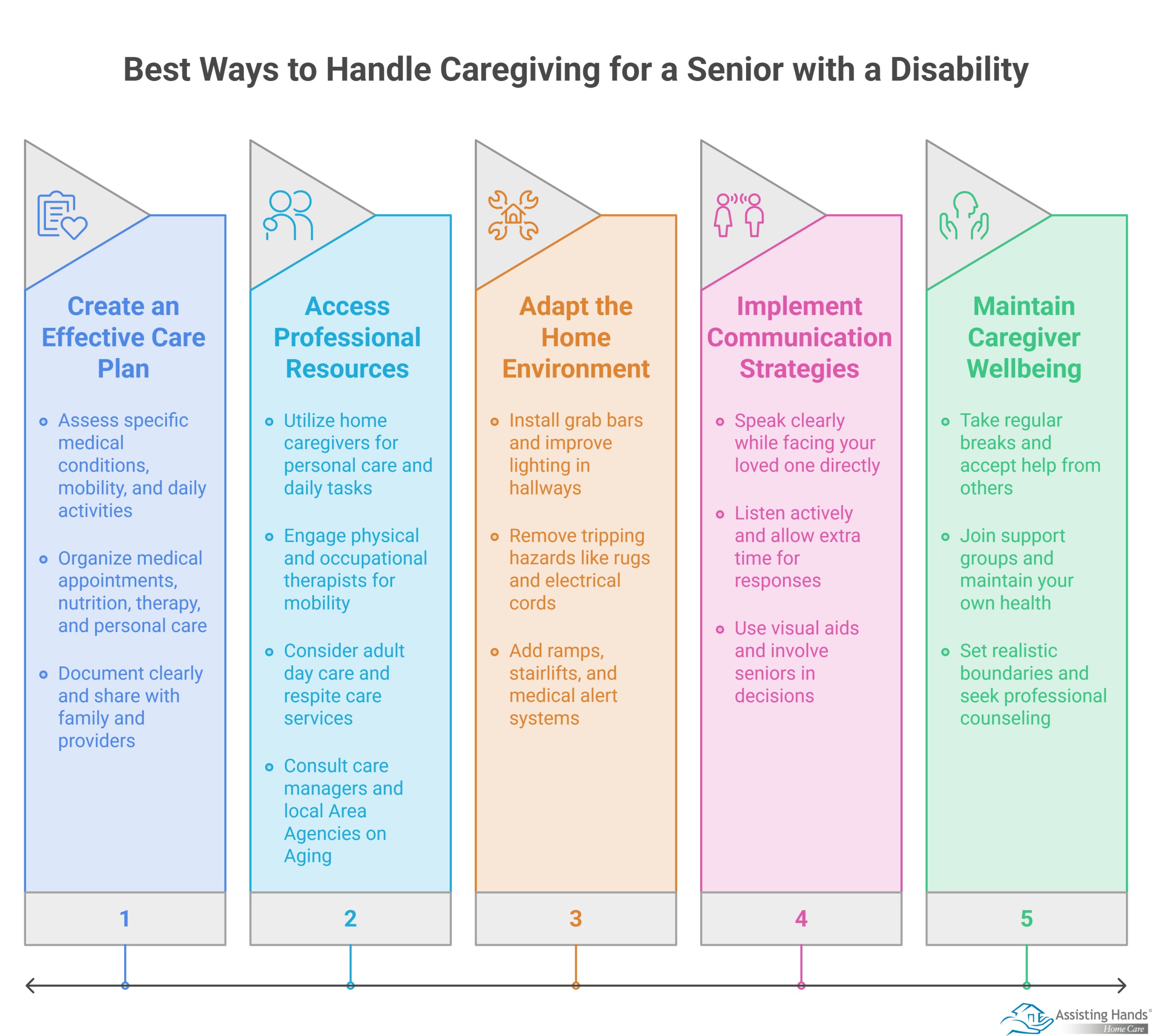
The best ways to handle caregiving for a senior loved one with a disability include creating a structured care plan, accessing professional support services, and prioritizing both your loved one’s needs and your wellbeing. Caring for a senior with a disability requires patience, knowledge, and the right resources to ensure high-quality care. This guide provides practical strategies to help caregivers navigate their responsibilities with confidence.
How Do You Create an Effective Care Plan?
Start by assessing your loved one’s specific needs, including medical conditions, mobility limitations, and daily living activities. Work with healthcare professionals to develop a comprehensive care plan that addresses:
- Medical appointments and medication organization
- Nutritional requirements and meal planning
- Physical therapy or exercise routines
- Personal care assistance (bathing, dressing, grooming)
- Social engagement and mental stimulation
Document everything clearly and update the plan regularly as your loved one’s needs change. Share this plan with all family members and healthcare providers involved in the care process.
Families who need help caring for senior loved ones can turn to Assisting Hands Home Care, a leading provider of Fort Lauderdale senior care. Services available in our customizable care plans include meal prep, mental and social stimulation, assistance with personal hygiene tasks, and much more.
What Professional Resources Are Available?
Multiple professional services can provide essential support for caregivers:
- Home caregivers who assist with personal care and daily activities
- Physical and occupational therapists who help seniors maintain mobility and independence
- Adult day care centers that offer supervision and social activities
- Respite care services that give primary caregivers temporary relief
- Care managers who coordinate services and navigate healthcare systems
Many communities also offer programs through Area Agencies on Aging that connect caregivers with local resources and support groups.
How Can You Adapt the Home Environment?
Making the home safer and more accessible reduces injury risks and promotes independence. Key modifications include:
- Installing grab bars in bathrooms and along hallways
- Removing tripping hazards like loose rugs and electrical cords
- Improving lighting throughout the home, especially in stairways
- Adding ramps or stairlifts for those with mobility challenges
- Placing frequently used items within easy reach
- Considering a medical alert system for emergencies
Consult with an occupational therapist for personalized recommendations based on your loved one’s specific disability and living space.
What Communication Strategies Work Best?
Effective communication strengthens the caregiving relationship and ensures better care outcomes. Practice these techniques:
- Speak clearly and at a comfortable pace, facing your loved one directly.
- Listen actively without interrupting or finishing your loved one’s sentences.
- Use visual aids or written instructions when helpful.
- Be patient and allow extra time for responses.
- Validate your loved one’s feelings and concerns.
- Involve your loved one in care decisions whenever possible.
For seniors with hearing or cognitive impairments, adjust your approach accordingly and consider assistive communication devices if needed.
How Do Caregivers Maintain Their Own Wellbeing?
Caregiver burnout is a real concern that affects the quality of care provided. Protect your health by:
- Taking regular breaks and accepting help from family and friends
- Joining caregiver support groups to share experiences and advice
- Maintaining your own medical appointments and healthy habits
- Setting realistic expectations and boundaries
- Seeking counseling when feeling overwhelmed
- Staying connected with your social network
Remember that caring for yourself isn’t selfish—it’s necessary for providing sustainable compassionate care.
Family caregivers need to care for their own wellbeing. If you’re caring for an aging loved one and are feeling overwhelmed, consider hiring a professional caregiver to provide respite and overnight home care Fort Lauderdale families can trust. To prevent burnout, you can turn to Assisting Hands Home Care. One of our professional caregivers can assist your loved one at home while you take a nap, go to work, run errands, or go on vacation.
Whether you need respite from your caregiving duties or your aging loved one needs Fort Lauderdale 24-hour home care, Assisting Hands Home Care can meet your family’s care needs. Our dedicated caregivers are available around the clock to provide transportation to doctor’s appointments, ensure seniors take their prescribed medications, and help with a variety of tasks in and outside the home. To create a comprehensive in-home care plan for your loved one, give us a call today.
Frequently Asked Questions
What financial assistance is available for senior disability care?
+
Many seniors qualify for programs like Medicaid, veterans benefits, or state-funded assistance programs that can cover some caregiving costs. Contact your local Area Agency on Aging to explore available options.
How do I know when it’s time for professional home care?
+
Consider professional care when your loved one’s needs exceed your ability to provide safe care, when your own health is affected, or when your loved one requires 24-hour supervision or specialized attention.
Can I get paid for caring for a disabled senior family member?
+
Some states offer paid family caregiver programs through Medicaid or veterans programs. Eligibility varies by location and circumstances, so research your state’s specific programs.
What legal documents should be in place?
+
Essential documents include a durable power of attorney, healthcare proxy, living will, and HIPAA authorization. These ensure you can make decisions and access information on your loved one’s behalf when needed.
How often should the care plan be updated?
+
Review and update the care plan at least every six months, or sooner if there are significant changes in your loved one’s health, mobility, or cognitive function.