
Safe transfers and repositioning involve securely moving a person from one location to another or adjusting his or her posture to prevent discomfort, which professional home care providers accomplish using specialized techniques and equipment. Proper movement strategies protect both the individual and the caregiver from physical strain or injury. Learning about these methods ensures a safer and more comfortable living environment for adults with limited mobility.
What Are Safe Transfers and Repositioning?
Safe transfers refer to the process of helping an individual move from one surface to another, such as shifting from a bed to a wheelchair or moving from a chair to a toilet. Repositioning involves adjusting a person’s body alignment while he or she is sitting or lying down for extended periods. Both practices require specific physical techniques that prioritize balance, leverage, and careful coordination to ensure the individual remains secure throughout the entire movement.
A trained caregiver with experience in caring for seniors with mobility limitations can be a fantastic resource for family members. Fort Lauderdale at-home care experts are available to provide high-quality care to southeastern Florida seniors on an as-needed basis. From assistance with mobility and exercise to providing transportation to the doctor’s office and social events, there are a variety of ways professional caregivers can help your aging loved one continue to live independently.
Why Is Frequent Repositioning Important for Mobility?
Remaining in one position for too long can cause significant discomfort and negatively impact physical wellbeing. Home care providers utilize frequent repositioning to maintain the individual’s quality of life and physical integrity. Key benefits include:
- Preventing skin breakdown – Shifting weight relieves pressure on vulnerable areas like the heels, hips, and tailbone.
- Increasing circulation – Adjusting posture encourages healthy blood flow throughout the extremities.
- Enhancing comfort – Regular movement prevents muscle stiffness and reduces overall body aches.
How Do Home Care Professionals Execute Safe Transfers?
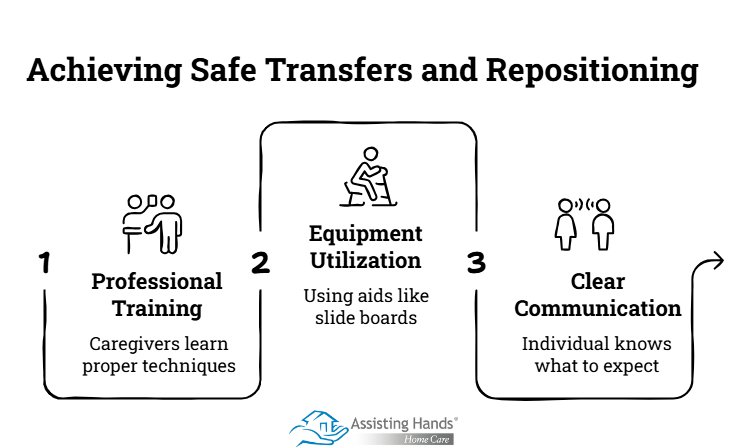
Home caregivers are trained to use proper body mechanics rather than relying solely on upper body strength. They typically stand close to the individual, maintain a wide base of support, and bend at the knees to lift with their legs. Caregivers also communicate clearly with the individual before initiating any movement, ensuring the person knows what to expect and can assist in the transfer to the best of his or her physical ability.
What Equipment Can Assist with Moving Safely at Home?
Using the right physical aids greatly reduces the risk of falls or caregiver strain during daily routines. Home care professionals frequently utilize or recommend several tools to make movement smoother. Common nonmedical devices include:
- Slide boards – Smooth planks that bridge the gap between a bed and a wheelchair, allowing the person to slide across while seated
- Gait belts – Sturdy belts placed around the individual’s waist to give the caregiver a secure handhold
- Grab bars – Securely mounted wall bars that provide stability during standing or pivoting
- Pivot discs – Rotating floor devices that help individuals turn without twisting their knees or ankles
If you’re the primary family caregiver for an elderly loved one, 24-hour home care for Fort Lauderdale seniors is available around the clock if your loved one’s health has become too difficult to manage without professional expertise. At Assisting Hands Home Care, we take measures to help seniors prevent illness and injury by assisting with exercise and mobility, preparing nutritious meals, helping with bathing and other personal hygiene tasks, and much more.
Family caregivers need to care for their own wellbeing. If you’re caring for an aging loved one and are feeling overwhelmed, consider hiring a professional caregiver to provide respite, live-in, and overnight home care Fort Lauderdale families can trust. To prevent burnout, you can turn to Assisting Hands Home Care. One of our professional caregivers can assist your loved one at home while you take a nap, go to work, run errands, or go on vacation. To learn about our premier in-home care options, give us a call today.
Frequently Asked Questions
How often should an individual be repositioned in bed?
+
A standard guideline is to change the person’s position every two hours. This regular adjustment prevents skin breakdown and increases daily comfort.
What is a gait belt and how is it used? +
A gait belt is a sturdy strap secured around a person’s waist to provide a handhold for the caregiver. It offers physical stability and control when guiding someone from a seated to a standing position.
How does home care make bathrooms safer for transfers?
+
Home caregivers help individuals navigate slippery bathroom surfaces by providing physical support and utilizing installed grab bars or shower chairs. This greatly reduces the risk of falls during daily hygiene routines.
Can family members perform safe transfers without specialized training?
+
While family members can help, they should learn proper body mechanics from a professional to avoid personal injury. Utilizing home care services ensures these movements are done correctly and safely.