Anyone caring for a parent with dementia knows the moment. Your dad is sure he has to get to work. He’s putting on his shoes and getting upset that nobody will drive him. Telling him he retired twenty years ago doesn’t help. It usually makes things worse.
That’s why so many families look for useful distraction techniques for dementia caregivers. Distraction isn’t trickery and it isn’t avoidance. It means meeting your loved one where he or she is and gently moving his or her attention somewhere calmer. Done well, it can turn a stressful afternoon into an ordinary one.
Effective distraction starts with observation. Notice what sets off agitation, what time of day it tends to happen, and what has calmed your loved one before. The ten techniques below are a starting point. Over time you’ll learn which ones work for your family member.
1. Use Familiar Music to Redirect Attention
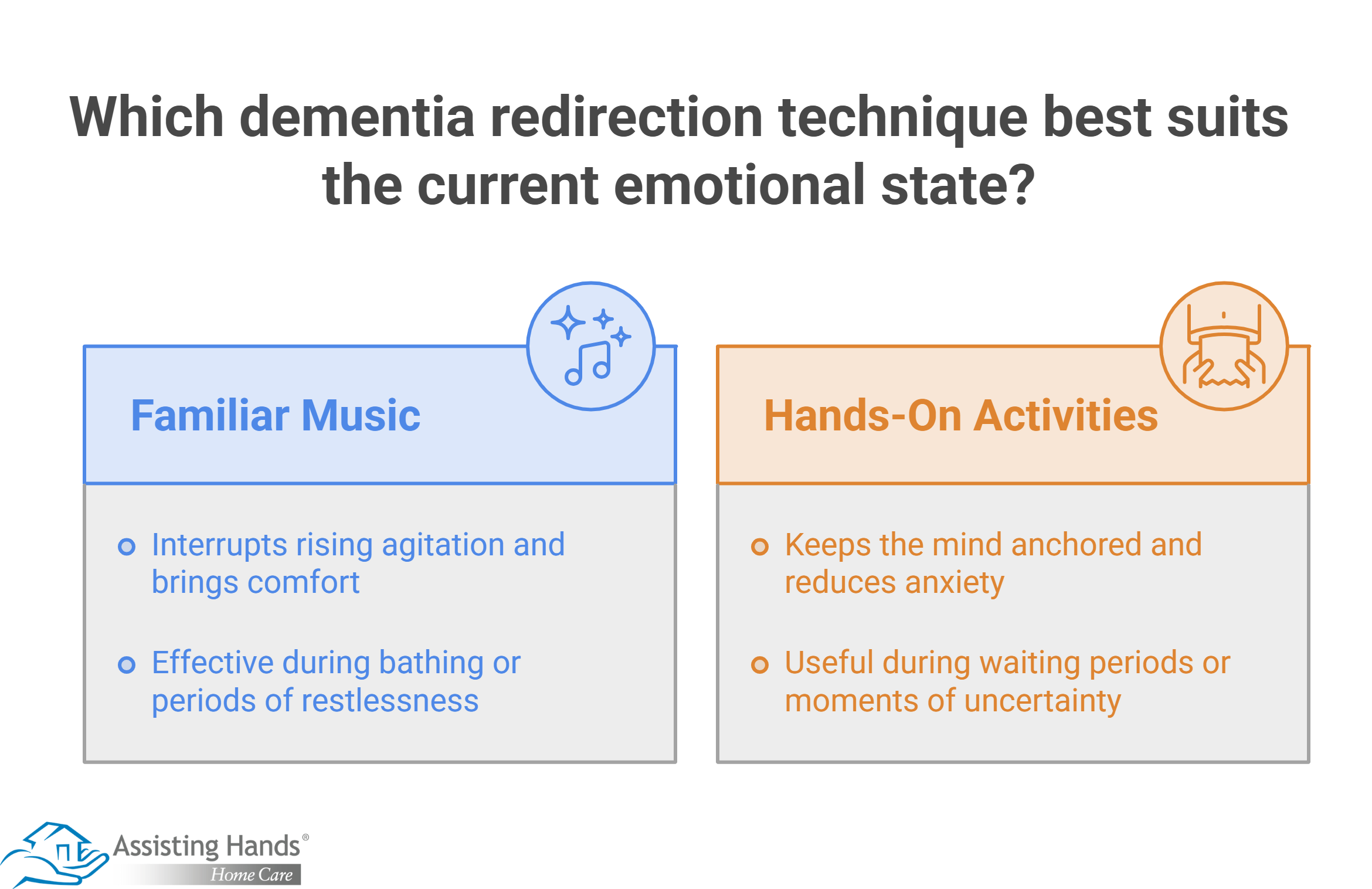
Music deeply affects memory and mood, making it a powerful tool during stressful moments. Playing familiar songs can interrupt rising agitation and bring comfort by evoking positive memories. People with Alzheimer’s and other forms of dementia often remember the words to songs from their youth long after other memories have faded, and music can have a relaxing effect when little else works.
Try music during routines that tend to cause resistance, like bathing or getting dressed, or during restless stretches in the afternoon. Big band, hymns, Motown or old country songs all work, as long as it’s what your loved one actually listened to. Caregivers exploring supportive options such as home care in Fort Lauderdale often build music into daily care plans because it can soothe, spark recognition, and create connection. A short playlist of favorites, ready on a phone or speaker, makes it easy to use the moment you need it.
2. Offer Simple, Hands-On Activities
Tactile activities keep the hands busy and the mind anchored. Folding towels, sorting buttons, rolling yarn, or holding a soft-textured object can quickly redirect repetitive behaviors, like asking the same question again and again or pacing the hallway.
These tasks are especially helpful during waiting periods, such as before a meal or while you get ready for an appointment. Many families pair these techniques with professional support such as hourly care so routines stay structured through the day. Short, familiar tasks give your loved one a sense of purpose and ease the anxiety that comes with idle time. Rotate a few options so they don’t get boring.
3. Try Gentle Conversation to Shift Focus
Conversation is a powerful redirection tool, especially when emotions are escalating. Ask about your loved one’s childhood, the town he or she grew up in, a favorite holiday tradition, or how he or she met his or her spouse. Old memories often stay clearer than recent ones, so these questions give your loved one something he or she can answer with confidence.
This works especially well with delusions or false beliefs, which are common in Alzheimer’s and vascular dementia. If your mother is looking for her own mother, don’t correct her. Saying “Your mom died years ago” can feel like fresh grief every time. Try “Tell me about your mom. What was she like?” You’re responding to the feeling behind the question, not the facts.
Caregivers trained in supportive redirection, especially those offering dementia care in Fort Lauderdale, use gentle dialogue to guide people through moments of confusion. It calms the moment and builds trust, which makes the next difficult moment a little easier.
4. Redirect with Sensory Comfort Items
Soft blankets, warm towels, scented lotion, or a smooth stone to hold can ground someone during an overwhelming moment. A hand massage with lotion is one of the simplest ways to calm a dementia patient without saying much at all.
Sensory items work especially well during sundowning, the late-afternoon and evening confusion many people with dementia experience. Families searching for natural remedies for sundowning often find that small comforts like these, along with steady routines and good lighting, help more than they expected. Many caregivers keep a small basket of sensory items nearby so they’re ready when needed. Professionals providing personal care in Fort Lauderdale use this kind of sensory redirection during bathing, bedtime, and other transitions that can feel stressful.
5. Offer Visual Distraction Through Photos or Memory Books
Labeled photo albums, memory books, or familiar household objects can draw attention toward comforting moments from the past. Hand your loved one a wedding photo or a picture from a favorite vacation and ask him or her about it. Often the story that follows replaces whatever was causing the agitation.
Memory books are particularly useful for afternoon restlessness or when someone keeps asking the same question. Label photos with names and places so the conversation doesn’t depend on your loved one remembering who everyone is.
Comparison Chart: Distraction Techniques and Benefits
| Technique | Primary Benefit | Best Used During |
| Music | Calms agitation | Bathing, transitions |
| Hands-On Tasks | Reduces anxiety | Waiting periods |
| Conversation | Builds comfort | Early agitation |
| Sensory Items | Grounds emotions | Sundowning |
| Memory Books | Sparks recognition | Emotional overwhelm |
| Outdoor Time | Resets mood | Afternoons |
| Structured Tasks | Adds purpose | Boredom |
| Snacks & Drinks | Meets needs | Pre-meal periods |
| Humor | Lightens mood | Routine resistance |
| Environmental Adjustments | Lowers overstimulation | Any agitation |
6. Use Outdoor Time to Reset Mood
Sometimes the best redirection is a change of scenery. Sitting on the porch, walking around the yard, or watching birds at a feeder can ease irritability and restlessness. Physical movement often makes it easier for someone with dementia to refocus, especially if the agitation comes from pent-up energy.
Late afternoon is a good time for this, since that’s when mood swings often get worse. In South Florida, plan around the heat. Morning or early evening is usually more comfortable, and bring water and shade.
7. Provide Short, Structured Tasks
Some people with dementia act out because they’re bored or tired of what they’re doing and can’t explain it. If you see that happening, switch to another activity you know your loved one enjoys.
Asking for help is one of the simplest ways to redirect. “Could you help me match these socks?” or “Would you fold these napkins for dinner?” gives your loved one something else to focus on and a chance to feel useful. Wiping the table, sorting silverware and watering plants all work. The task doesn’t need to be done perfectly. Feeling needed is what matters.
8. Offer Food or Hydration as Subtle Redirection
When families ask what they can give a loved one with dementia to calm him or her down, the answer is sometimes as simple as a snack or a drink. Many people with dementia get upset when they’re hungry, thirsty or uncomfortable but can’t tell you why.
Offering fruit slices, crackers, a cookie, or a warm cup of herbal tea meets a physical need and shifts attention at the same time. It works well before transitions like bathing or bedtime. If agitation is severe or comes on suddenly, call your loved one’s doctor, because it can be a sign of pain, an infection or a medication problem.
9. Use Humor and Lighthearted Distraction
Light humor can dissolve tension before agitation grows stronger. A smile, a silly face, a gentle joke at your own expense, or singing off-key on purpose can change the mood almost instantly. Humor often works as a great distraction for seniors with dementia because it doesn’t ask them to remember anything. It just asks them to enjoy the moment with you.
Humor helps most during routine tasks that cause resistance. It:
- Encourages positive emotional responses
- Interrupts escalating behaviors early
- Builds trust between you and your loved one
Laugh with your loved one, never at him or her. If a joke lands badly, move on to something else.
10. Adjust the Environment for Calm Redirection
Changing the surroundings often makes the biggest difference. Loud noise, clutter, a TV playing the news, or harsh lighting can all trigger confusion. Turn off the TV, close the blinds against glare, lower the volume in the room, or move to a quieter space.
This works at any time of day, especially when you can’t tell what set things off. Over time, watch for patterns. If your loved one gets upset every time the doorbell rings or the vacuum runs, you can plan around it.
What to Remember When Redirecting Someone with Dementia
No technique works every time. Something that calms your father on Monday might fall flat on Thursday. That isn’t failure. It’s how dementia works.
A few principles help with almost any redirection strategy:
- Stay calm – Your loved one will often mirror your tone and body language.
- Don’t argue or correct – You won’t win the argument, and it raises everyone’s stress.
- Respond to the emotion – “You seem worried” often helps more than explaining the facts.
- Give it a minute – Distraction works best when you start a new activity instead of trying to talk your loved one out of the old one.
- Take care of yourself – These moments are draining, and family caregivers need breaks too.