Caring for a senior loved one is a rewarding experience, but it can also bring significant financial strain. Fortunately, several financial assistance programs are available to help caregivers ease the burden. This guide highlights key resources every caregiver should know about.
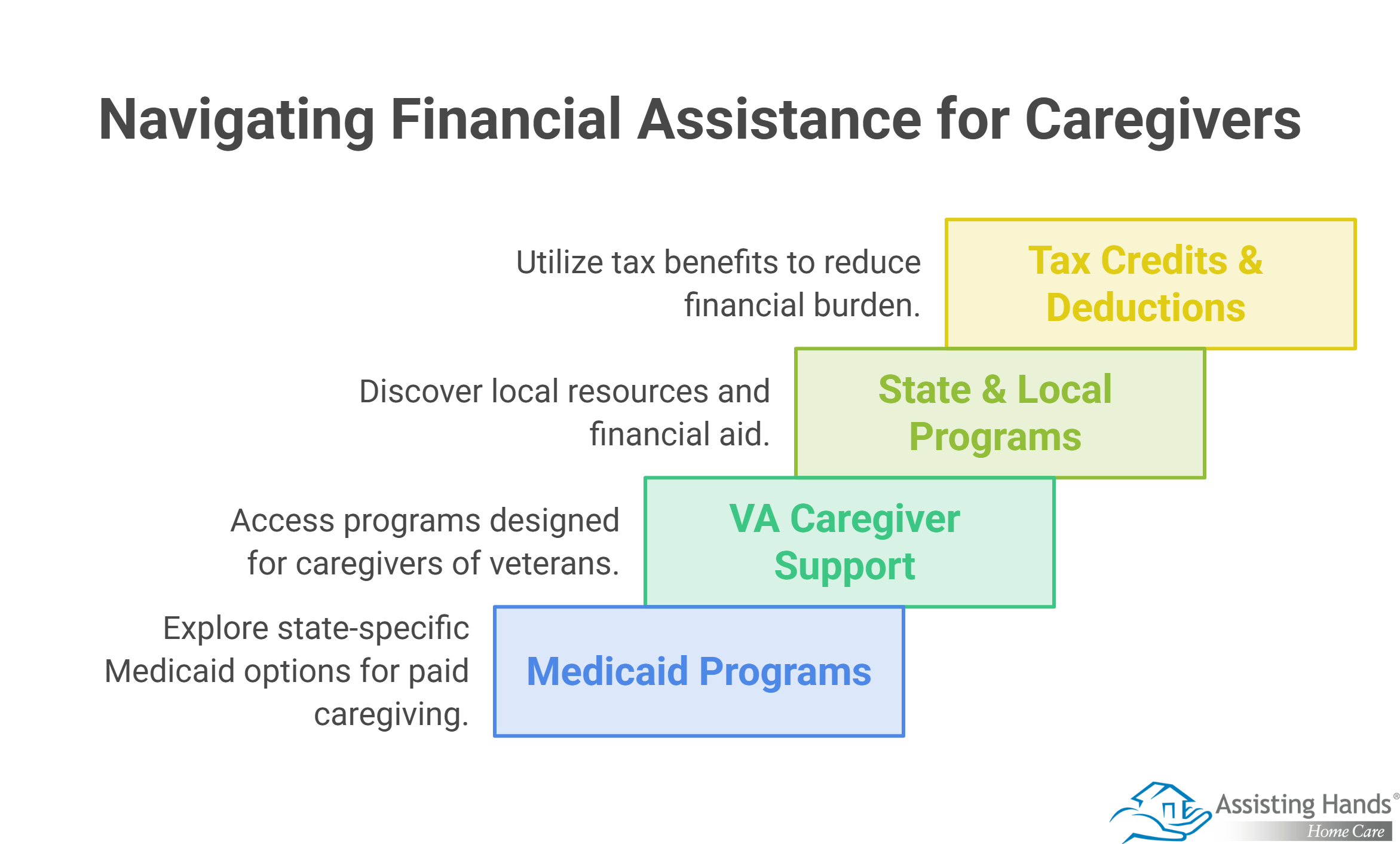
Medicaid Programs
Medicaid offers several programs that can provide financial relief for caregivers. While specific offerings vary by state, many have options that allow family members to get paid for their caregiving efforts.
- Medicaid self-directed care – Also known as participant-directed or consumer-directed care, this option gives care recipients a budget to manage their own services. This budget can often be used to hire and pay family members for providing care at home.
- Home and Community-Based Services (HCBS) Waivers – These state-specific waivers provide services to individuals who would otherwise require care in an institutional setting, like a nursing home. Under certain waivers, family members can be compensated for providing personal care services. Check your state’s Medicaid agency website to see what waiver programs are available and if they allow for paid family caregivers.
Many seniors prefer aging in place over moving to assisted living facilities. If your senior loved one needs assistance to remain safe and comfortable while living at home, reach out to Assisting Hands Home Care, a leading Home Care Fort Lauderdale agency. Our dedicated in-home caregivers can assist with meal prep, bathing and grooming, exercise, medication reminders, and many other important tasks.
Veterans Affairs (VA) Caregiver Support
If your loved one is a veteran, the Department of Veterans Affairs offers robust support programs. These initiatives are designed to assist caregivers of veterans who were injured in the line of duty or have serious illnesses.
- Program of Comprehensive Assistance for Family Caregivers (PCAFC) – This is the flagship program for eligible veterans who incurred serious injuries. It provides a monthly stipend, access to health insurance, mental health counseling, and caregiver training.
- Veteran-Directed Care (VDC) – Similar to Medicaid’s self-directed programs, VDC gives veterans flexible budgets for their care needs. Veterans can use these funds to hire family members or friends to help with daily activities like bathing, dressing, and meal preparation.
Some seniors only require help with a few daily tasks so they can maintain their independence. However, those living with serious illnesses may need more extensive assistance. Luckily, there is professional live-in care Fort Lauderdale seniors can rely on. Home can be a safer and more comfortable place for your loved one to live with the help of an expertly trained and dedicated around-the-clock caregiver.
State and Local Assistance Programs
Beyond federal programs, many states and local agencies offer their own financial assistance for caregivers. These programs are often funded through the Older Americans Act and are designed to support older adults who wish to remain in their homes.
- Family caregiver support programs – Most states have these programs, which can offer direct financial subsidies, respite care vouchers, or reimbursement for care-related expenses.
- Area Agencies on Aging (AAA) – Your local AAA is a valuable resource for finding state-specific programs. They can connect you with financial assistance, support groups, and other community services available to caregivers in your area. You can find your local agency through the Eldercare Locator.
Tax Credits and Deductions
Don’t overlook the financial relief available through the tax system. Several federal tax credits and deductions can reduce your taxable income and provide a much-needed financial break.
- Child and Dependent Care Credit – If you pay for care for a qualifying dependent while you work or look for work, you may be eligible for this credit.
- Credit for Other Dependents – You may be able to claim a tax credit of up to $500 for a qualifying dependent who isn’t your child, such as an elderly parent.
- Medical expense deductions – If you pay for your loved one’s medical expenses and he or she qualifies as your dependent, you may be able to deduct these costs from your taxes.
Your loved one’s home care needs could vary according to his or her ability to accomplish everyday tasks. There are a variety of reasons family caregivers in Fort Lauderdale should consider respite care Fort Lauderdale, FL. Families often have additional responsibilities that make it more challenging to provide the care their senior loved ones need and deserve. A professional home caregiver can take over your important caregiving duties, allowing you more time to focus on yourself. Trust Assisting Hands Home Care to provide high-quality, compassionate, professional care for your loved one. If your loved one needs help with the challenges of aging, call one of our compassionate Care Specialists today.