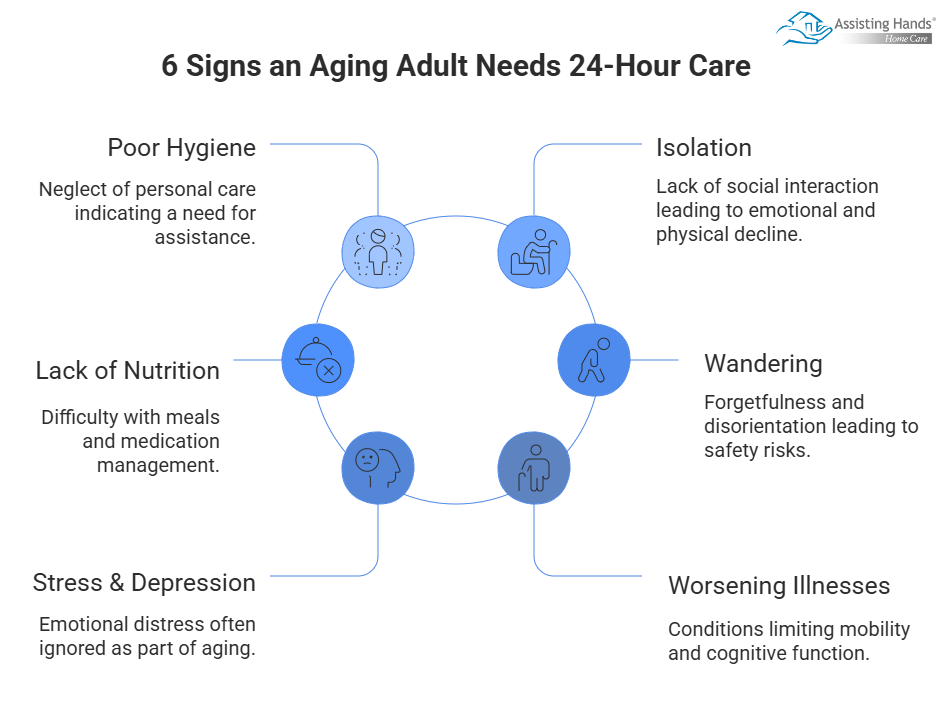
The type of care aging adults need will vary depending on their mental, physical, and emotional health. As a family caregiver, monitoring your senior loved one’s needs regularly allows you to provide the assistance he or she requires to stay as safe and healthy as possible. Understanding elderly care needs and the warning signs your loved one requires around-the-clock care is crucial for maintaining his or her well-being. The indications will vary, but below are some of the most common signs that should never be ignored.
1. Poor Hygiene
Body odor, bad breath, and other signs of poor hygiene should be taken seriously. It could signify that your parent cannot care for him or herself and requires additional help. In some cases, your loved one might need constant care from you and other family members or professional caregivers. The lack of hygiene could be due to memory loss, physical challenges, or other factors, highlighting the importance of understanding elderly care needs.
If your aging loved one needs help managing everyday tasks or encouragement to adopt healthier lifestyle choices, turn to Assisting Hands Home Care, a leading provider of in-home senior care services. We provide professional caregivers around the clock to help seniors live longer, happier, and healthier lives.
2. Isolation
Living alone doesn’t mean seniors should be by themselves constantly. Without social interaction, mental, emotional, and physical health can decrease significantly. When your parent becomes less active, take this as a sign that constant care may be necessary. The objective is to boost quality of life instead of increasing isolation and loneliness. Preventing senior isolation is a key part of home care for aging adults.
3. Lack of Nutrition
If your loved one faces difficulty with meals, this may be a sign that he or she needs consistent care daily. This can include shopping for food, cooking meals, and keeping the kitchen clean. It also allows you to ensure your parent is receiving reminders to take his or her medication properly, especially prescriptions that must be taken with food. Managing senior nutrition and hygiene are essential part of elderly care that professional caregivers can make easier and safer. For families asking does my mother need home care services, hiring trained caregivers can help maintain nutrition and overall wellness.
4. Wandering
Going outdoors, especially at night, isn’t always safe for older adults. Wandering could signify forgetfulness caused by a disease such as dementia, a reaction to medications, or aging in general. Try to monitor your loved one’s movements more, and utilize cameras and other devices to determine if he or she is wandering at night. Don’t wait long before stepping in and providing constant care because it could jeopardize your loved one’s health and safety.
Certain age-related conditions make it challenging for seniors to age in place safely and comfortably, which is why dementia care at home is so important. Integrating reliable support through Fort Lauderdale home care ensures seniors receive personalized attention while maintaining comfort and safety at home. Whether your loved one is living with dementia or recovering from a stroke, you can trust the experienced caregivers from Assisting Hands Home Care to enhance his or her quality of life.
5. Stress & Depression
These are among the most common signs a senior is going through health issues, but they’re often ignored or considered part of the aging process. Many family members will think their loved ones’ stress and depression are due to the loss of particular abilities or the deaths of friends. However, they could be due to pain and various health conditions. Therefore, they should be addressed through programs focused on stress and depression in the elderly and professional guidance from professional caregivers for seniors.
6. Worsening Illnesses
As some conditions continue to develop, specifically those that limit the ability to move, think, and act, it will be nearly impossible for older adults to continue living alone or with limited care. Go slowly when implementing the around-the-clock care process. There are ways to customize daily responsibilities so your parent can try to take them on safely and with more confidence. Understanding the signs a senior needs 24-hour care helps families plan the right support at the right time.
The type of at-home care Fort Lauderdale, FL, seniors need can vary. Some need assistance for a few hours a day, while others require more extensive, around-the-clock assistance. At Assisting Hands Home Care, we tailor our care plans based on each senior’s individual care needs, and the plans can be adjusted at any time. To talk to one of our friendly Care Managers and create a customized senior care plan, call us at +1 754-999-9490.
Frequently Asked Questions
What are the common signs a senior needs 24-hour care?
+
Common signs include poor hygiene, isolation, difficulty with meals, wandering, stress, depression, and worsening illnesses. Observing these can help families decide when around-the-clock care is needed.
How can professional caregivers support elderly care needs at home?
+
Professional caregivers assist with daily tasks, nutrition, hygiene, medication reminders, and companionship. They ensure seniors remain safe, healthy, and socially engaged.
What is dementia care at home, and how does it help?+
Dementia care at home provides tailored supervision and cognitive support for seniors. It prevents wandering, promotes safety, and enhances quality of life.
How can families prevent senior isolation effectively?+
Encouraging social interaction, hobbies, and home visits can prevent loneliness. In-home caregivers also provide companionship and structured daily activities.
Why is managing senior nutrition and stress important?+
Proper nutrition and mental well-being reduce health complications and depression in elderly adults. Caregivers ensure balanced meals, emotional support, and regular monitoring.