
Creating a care plan for a senior loved one can feel overwhelming, especially when you’re juggling medical appointments, daily routines, and emotional support needs. A well-structured care plan serves as your road map, ensuring nothing falls through the cracks while providing peace of mind for everyone involved.
Start with a Comprehensive Assessment
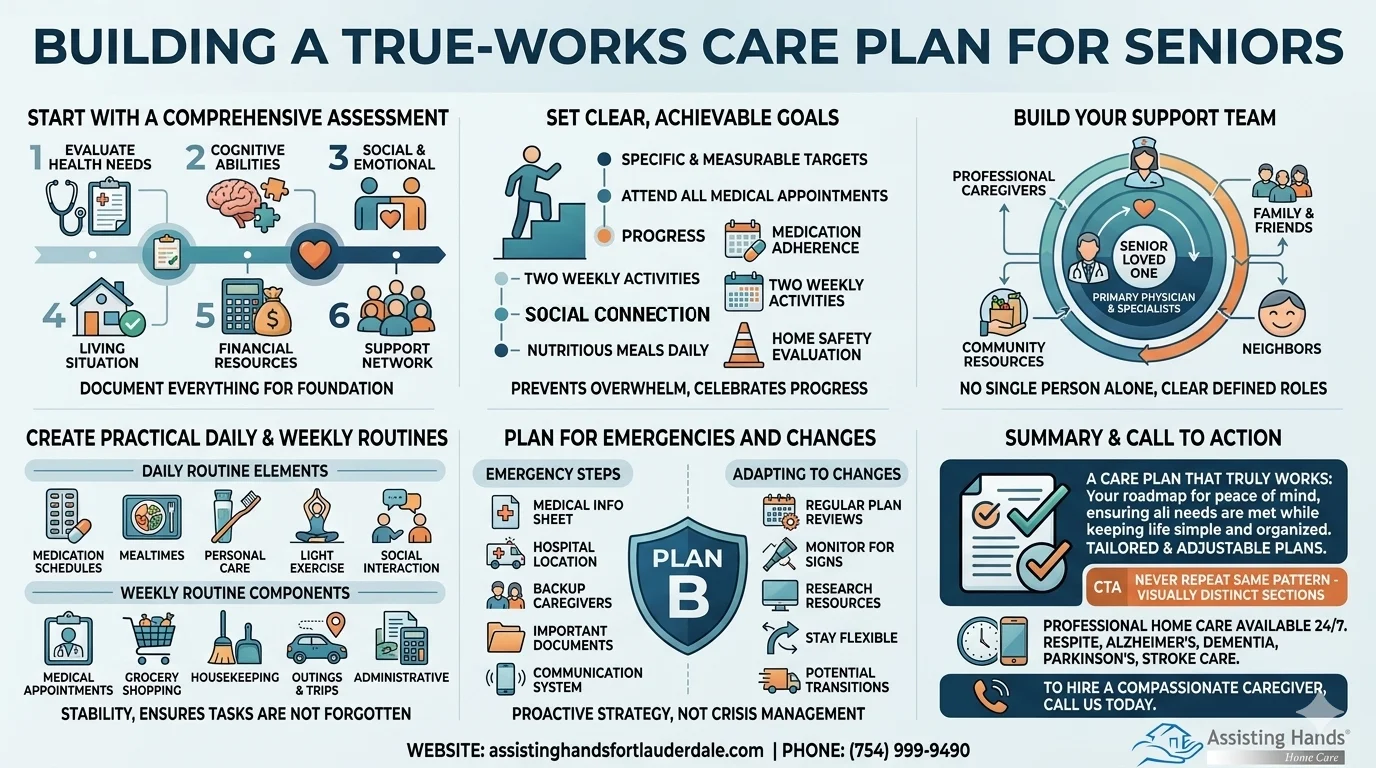
Before diving into solutions, take time to evaluate the current situation thoroughly. This assessment forms the foundation of your loved one’s entire care plan.
Key areas to evaluate:
- Physical health needs and limitations
- Cognitive abilities and any decline patterns
- Emotional and social support requirements
- Current living situation and safety concerns
- Financial resources and insurance coverage
- Existing support network of family and friends
Document everything you discover during this phase. Consider involving healthcare professionals, social workers, or care coordinators who can provide expert insights you might miss on your own.
The type of Home Care Fort Lauderdale seniors need can vary. Some need assistance a few hours a day, while others require more extensive around-the-clock assistance. At Assisting Hands Home Care, we tailor our care plans based on each senior’s individual care needs, and the plans can be adjusted at any time. We are a trusted provider of respite and 24-hour care, and we also offer specialized Alzheimer’s, dementia, Parkinson’s, and stroke care for seniors.
Set Clear, Achievable Goals
Transform your assessment findings into specific measurable objectives. Vague goals like “improve health” won’t guide effective action, but concrete targets will.
Examples of well-defined goals:
- Attend all scheduled medical appointments within the next three months.
- Establish a daily medication routine with at least 95 percent adherence.
- Maintain social connections through two weekly activities.
- Ensure nutritious meals are available seven days per week.
- Complete a home safety evaluation and implement recommended changes.
Break larger goals into smaller manageable steps. This approach prevents overwhelm and creates opportunities to celebrate progress along the way.
Build Your Support Team
No single person should handle all care responsibilities. Identify who can contribute to different aspects of the care plan and clearly define each person’s role.
Potential team members include:
- Primary care physician and specialists
- Home health aides or professional caregivers
- Family members and close friends
- Neighbors willing to help with specific tasks
- Community resources like senior centers or meal delivery services
- Professional services such as housekeeping or transportation
Create a contact list with everyone’s information, availability, and specific responsibilities. Share this list with all team members so everyone stays connected and informed.
Families who find it difficult to care for their aging loved ones without assistance can benefit greatly from professional respite care Fort Lauderdale seniors can rely on. Family caregivers who need a break from their caregiving duties can turn to Assisting Hands Home Care. Our caregivers can encourage your loved one to eat well, exercise regularly, get plenty of mental and social stimulation, and focus on other lifestyle factors that promote longevity.
Create Practical Daily and Weekly Routines
Structure provides stability and ensures important tasks don’t get forgotten. Design routines that work with natural energy levels and existing habits rather than against them.
Daily routine elements:
- Morning and evening medication schedules
- Mealtimes and preparation responsibilities
- Personal care activities like bathing and grooming
- Light exercise or physical therapy sessions
- Social interaction opportunities
Weekly routine components:
- Medical appointments and therapy sessions
- Grocery shopping and meal planning
- Housekeeping and maintenance tasks
- Social activities and outings
- Administrative tasks like paying bills
Use calendars, apps, or simple paper schedules to track routines. Visual reminders work especially well for people experiencing cognitive changes.
Plan for Emergencies and Changes
Life rarely goes according to plan, so build flexibility into your care strategy. Prepare for both medical emergencies and gradual changes in care needs.
Emergency preparedness steps:
- Create a medical information sheet with current medications, allergies, and emergency contacts.
- Identify the nearest hospital and urgent care facilities.
- Establish backup plans for when primary caregivers are unavailable.
- Keep important documents easily accessible.
- Set up a communication system to quickly notify team members.
Adapting to changing needs:
- Schedule regular care plan reviews every three to six months.
- Monitor for signs that current strategies aren’t working.
- Research additional resources before you need them.
- Stay flexible about modifying goals and routines.
- Plan for potential transitions like moving to assisted living.
Care plans evolve over time. What works today might need adjustment next month, and that’s completely normal. The key is staying proactive rather than waiting for problems to become crises.
Whether you need respite from your caregiving duties or your aging loved one needs live-in care Fort Lauderdale, Assisting Hands Home Care can meet your family’s care needs. Our dedicated caregivers are available around the clock to provide transportation to doctor’s appointments, ensure seniors take their prescribed medications, and help with a variety of tasks in and outside the home. If your loved one needs professional care, Assisting Hands Home Care is here to help. To hire a compassionate, dedicated caregiver, call us today.