
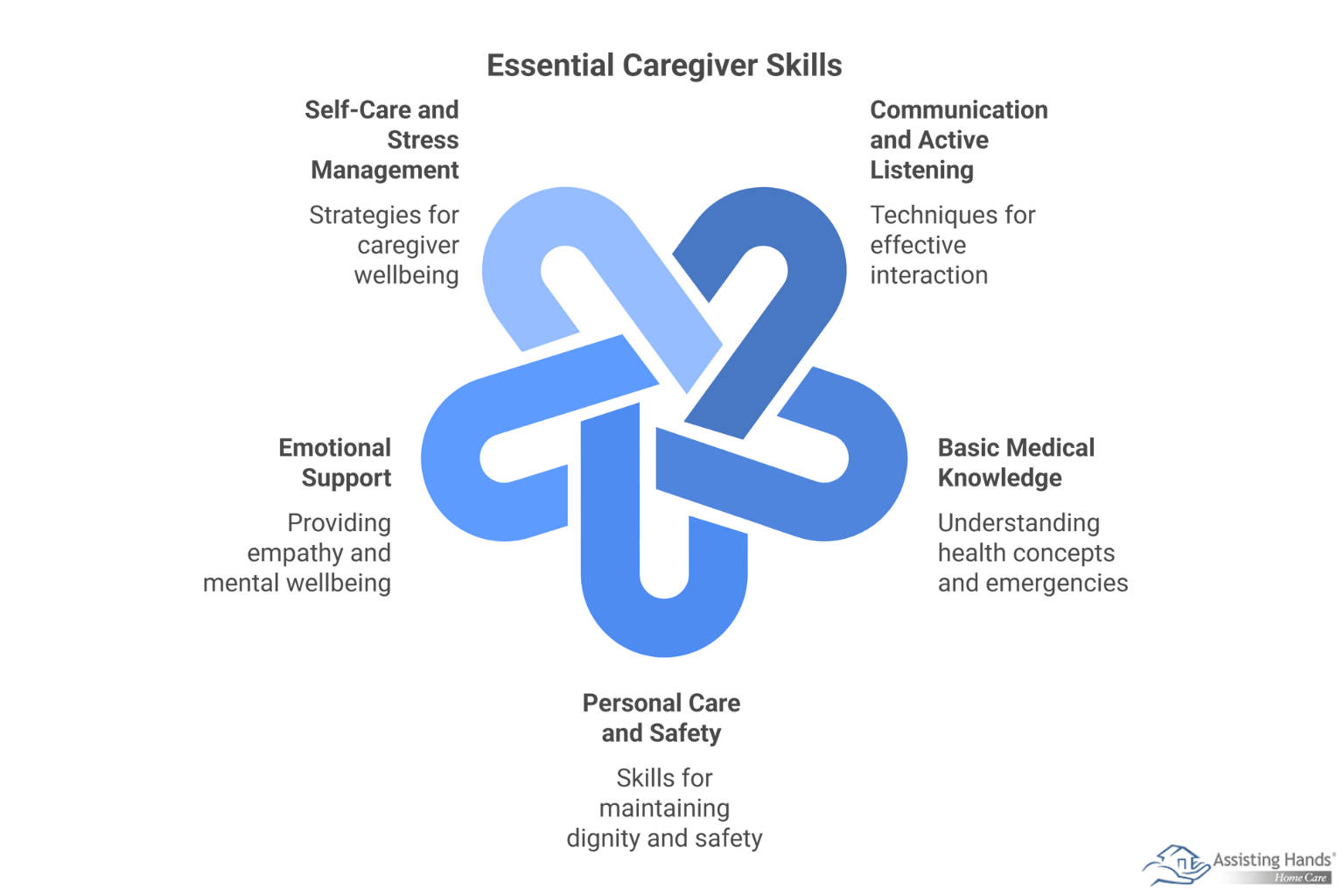
Caregiving is one of the most rewarding yet challenging roles anyone can take on. If you’re caring for an aging parent, developing the right skills can make all the difference in providing high-quality care while maintaining your own wellbeing.
Communication and Active Listening
Effective communication forms the foundation of high-quality caregiving. This skill involves much more than simply talking to your loved one.
Key communication techniques include:
- Speaking clearly and at an appropriate pace
- Using simple, direct language when necessary
- Maintaining eye contact and open body language
- Asking open-ended questions to encourage conversation
- Being patient when your loved one needs extra time to respond
Active listening means giving your full attention to what your loved one is saying, both verbally and nonverbally. Watch for changes in facial expressions, body language, or tone of voice that might indicate discomfort, confusion, or other needs.
Basic Medical Knowledge and Health Monitoring
Understanding fundamental health concepts helps caregivers recognize when something isn’t right and communicate effectively with healthcare professionals.
Essential medical skills to develop:
- Taking vital signs (temperature, blood pressure, pulse)
- Recognizing signs of common medical emergencies
- Understanding medication schedules and potential side effects
- Maintaining accurate health records and symptom logs
- Knowing when to contact healthcare providers
You don’t need to become a medical expert, but having this baseline knowledge can prevent minor issues from becoming major problems. Consider taking a basic first aid course or asking healthcare providers to explain specific conditions and warning signs.
A professional caregiver can be a wonderful source of support for both you and your loved one. Senior care experts are available to provide high-quality care to seniors on an as-needed basis. From assistance with mobility and exercise to providing transportation to the doctor’s office and social events, there are a variety of ways professional caregivers can help your aging loved one continue to live independently.
Personal Care and Safety Techniques
Providing personal care while maintaining dignity requires both technical skills and emotional sensitivity. Safety should always be the top priority for both you and your loved one.
Important personal care skills:
- Proper body mechanics for lifting and transferring
- Safe bathing and grooming techniques
- Fall prevention strategies
- Home safety assessments and modifications
- Infection control and hygiene practices
Learn how to use assistive devices like walkers, wheelchairs, or shower chairs correctly. Understanding proper techniques protects both of you from injury and helps your loved one maintain independence whenever possible.
Many seniors prefer aging in place over moving to assisted living facilities. If your senior loved one needs assistance to remain safe and comfortable while living at home, reach out to Assisting Hands Home Care, a leading Home Care Fort Lauderdale agency. Our dedicated in-home caregivers can assist with meal prep, bathing and grooming, exercise, medication reminders, and many other important tasks
Emotional Support and Mental Health Awareness
Caregiving involves supporting not just physical needs but also emotional and mental wellbeing, too. Many care recipients experience anxiety, depression, or frustration related to their condition or loss of independence.
Ways to provide emotional support:
- Practicing empathy and patience during difficult moments
- Encouraging social connections and meaningful activities
- Recognizing signs of depression or anxiety
- Creating routines that provide structure and comfort
- Knowing when to seek professional mental health support
Remember that validating feelings and offering a listening ear can be just as important as any physical care you provide.
Self-Care and Stress Management
Caregiver burnout is real and can seriously impact your ability to provide high-quality care. Learning to manage your own stress and maintain your health isn’t selfish—it’s essential.
Self-care strategies for caregivers:
- Setting realistic expectations and boundaries
- Building a support network of family, friends, or support groups
- Taking regular breaks and scheduling time for yourself
- Maintaining your own medical appointments and health routines
- Recognizing early signs of burnout and seeking help when needed
Consider respite care Fort Lauderdale services, which provide temporary relief so you can rest, run errands, or simply have time to yourself. Many communities offer caregiver support groups where you can share experiences and learn from others in similar situations.
Developing these essential skills takes time and practice, but each one you master will help you provide better care while protecting your own wellbeing. Remember that being a caregiver is a learning process, and it’s okay to ask for help along the way.
Family caregivers need to care for their own wellbeing. If you’re caring for an aging loved one and are feeling overwhelmed, consider hiring a professional caregiver to provide respite care. Families who want to prevent burnout can turn to Assisting Hands Home Care. One of our professional caregivers can assist your loved one at home while you take a nap, go to work, run errands, or go on vacation. To hire a professionally trained caregiver for your loved one, call us today.