
Communicating with a senior loved one who has dementia can be challenging, but it’s an essential part of maintaining connection and providing support. By understanding your loved one’s needs and applying compassionate strategies, you can foster positive and meaningful interactions.
Simplify Your Language
Using clear and simple language can make it easier for your loved one to follow conversations.
- Use short sentences – Break your thoughts into concise sentences to avoid overwhelming your loved one.
- Stick to one idea at a time – Focus on a single concept or question to minimize confusion.
- Avoid jargon or complex words – Opt for straightforward words that are easy to understand.
For example, instead of saying “Would you prefer having a sandwich or a salad for lunch?” try “Do you want a sandwich or a salad?”
Living with dementia can make it difficult for seniors to manage everyday tasks on their own. If your senior loved one needs help managing an illness or assistance with daily tasks, make sure you choose a top-rated provider of in-home care. Assisting Hands Home Care is here to help your loved one live a happier and healthier life in the golden years.
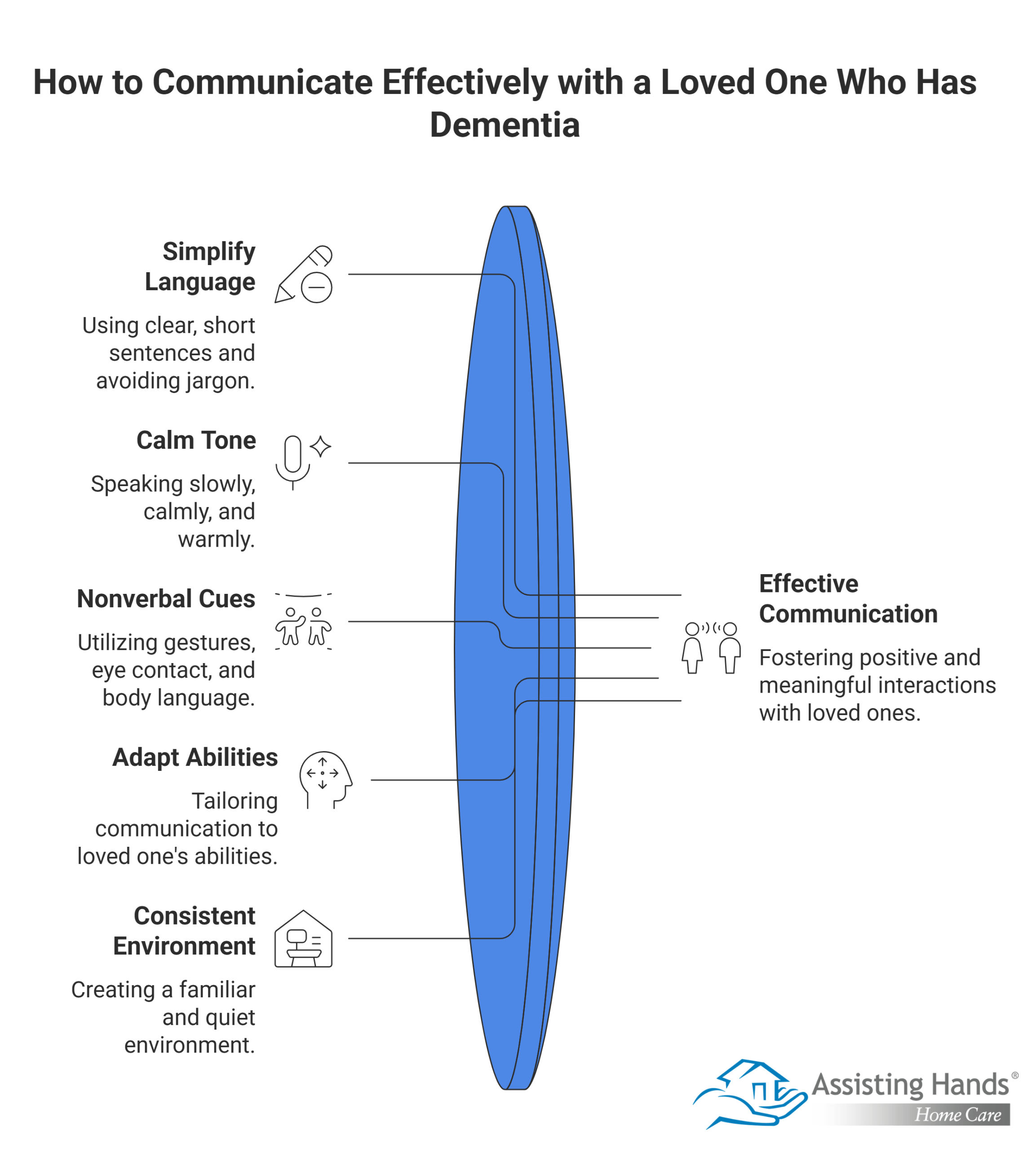
Maintain a Calm and Positive Tone
Your tone of voice can have a significant impact on how your message is received.
- Speak slowly and clearly – This allows your loved one to process the information at his or her own pace.
- Stay patient and calm – Frustration can escalate confusion, so remain calm even if you need to repeat yourself.
- Use a warm tone – A cheerful or soothing voice can create a safe environment for communication.
Sometimes, the emotions behind your words are more impactful than the words themselves.
Pay Attention to Nonverbal Communication
Gestures, facial expressions, and body language are crucial when communicating with someone with dementia, as verbal comprehension may decline over time.
- Maintain eye contact – This establishes connection and shows you’re fully engaged.
- Use gestures or demonstrations – Pointing, nodding, or demonstrating actions can clarify instructions or prompts.
- Be mindful of your body language – A relaxed posture and friendly facial expressions can set a comforting tone.
Nonverbal cues often provide essential context and reassurance in communication.
Trained caregivers who have experience in communicating with seniors with dementia can be a fantastic resource for family members. If your senior loved one has been diagnosed with a serious condition and needs help with tasks like meal prep, transportation, bathing, and grooming, reach out to Assisting Hands Home Care, a leading provider of elderly home care Fort Lauderdale, FL, families can trust. We also offer comprehensive care for seniors with dementia, Alzheimer’s, and Parkinson’s.
Adapt to Your Loved One’s Communication Abilities
Tailor your approach to your loved one’s current cognitive and verbal abilities, as these may fluctuate.
- Be ready to repeat or rephrase – If your loved one doesn’t understand something, rephrase it instead of repeating it verbatim.
- Be patient with pauses – Allow ample time for your loved one to process and respond without interrupting.
- Acknowledge your loved one’s emotions – Even if your loved one’s words are unclear, recognize the emotions he or she is expressing and respond empathetically.
For example, if your loved one becomes agitated, a calming response such as “I see this is upsetting for you. How can I help?” can be reassuring.
Establish a Consistent Environment
Familiarity and consistency can ease communication for someone with dementia.
- Engage in routine activities – Familiar settings and routines can reduce confusion and help conversations feel less overwhelming.
- Choose a quiet environment – Minimize background noise and distractions to help your loved one focus on the interaction.
- Use memory aids – Photographs, written reminders, or familiar objects can serve as helpful prompts during conversations.
Creating a safe and predictable environment fosters trust and facilitates smoother communication.
Aging in place can present a few challenges for seniors living with dementia. However, they can still live independently at home with the help of professional dementia care Fort Lauderdale. Families can rely on Assisting Hands Home Care to provide their elderly loved ones with mental and social stimulation, timely medication reminders, assistance with meal prep, and much more. Our caregivers are available around the clock to help your loved one live a happier and healthier life. Call us today to create a customized in-home care plan.