
When a senior loved one is diagnosed with dementia, it can be an emotional and challenging time for families. One vital step in planning for your loved one’s future care is establishing a power of attorney (POA). This legal document ensures someone trusted can make critical financial, medical, or legal decisions on your loved one’s behalf when he or she is no longer able to do so.
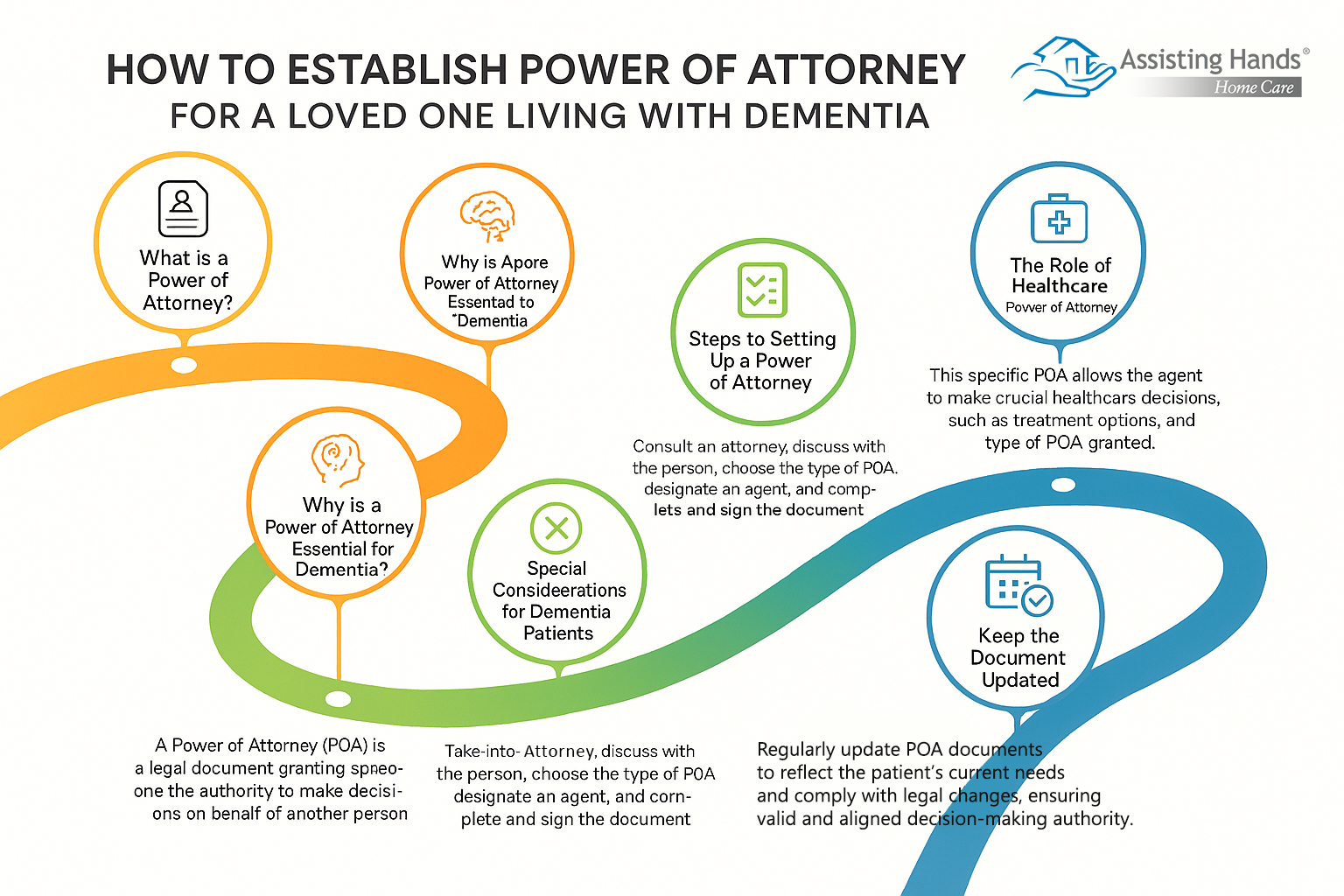
What Is a Power of Attorney?
A power of attorney is a legal document granting one person (the “agent” or “attorney-in-fact”) the authority to act on behalf of another (the “principal”). There are different types of POAs, including financial and healthcare, each designed to address specific needs:
- General power of attorney grants broad authority to the agent to handle a range of legal or financial matters.
- Durable power of attorney remains in effect even if the principal becomes incapacitated, making it ideal for situations involving dementia.
- Healthcare power of attorney specifically allows the agent to make medical decisions for the principal.
Understanding these types is essential to ensure the document aligns with your loved one’s needs and wishes.
Why Is a Power of Attorney Essential for Someone with Dementia?
A dementia diagnosis often means progressive cognitive decline, impacting the ability to manage daily tasks and make informed decisions. Setting up a power of attorney early in the illness ensures:
- Timely decision-making – Important financial and healthcare decisions can be made without delays.
- Legal protection – Prevents disputes among family members and ensures your loved one’s wishes are respected.
- Simplified management – The agent can step in to manage legal and financial matters seamlessly as dementia progresses.
Without a POA, families may need to go through a lengthy and costly guardianship process in court, which could delay critical decisions.
Making decisions for your loved one may include hiring a home caregiver to ensure your parent’s safety and comfort. Families looking for top-rated home care providers can reach out to Assisting Hands Home Care. From respite care to specialized Alzheimer’s, dementia, stroke, and Parkinson’s care, there are many ways we can make life easier for seniors and their loved ones.
Steps to Setting Up a Power of Attorney
- Have an open conversation
The first step is talking to your loved one about his or her wishes and the importance of a power of attorney. While the conversation may be difficult, it’s essential to ensure your loved one understands and consents while he or she is still mentally capable. Discuss your loved one’s priorities, such as who he or she trusts to act on his or her behalf and the type of decisions he or she wants the agent to handle.
- Choose the right agent
Selecting the right agent is crucial. This person should be trustworthy, responsible, and willing to act in your loved one’s best interest. Many families designate an immediate family member, such as a spouse or an adult child, but it’s important to choose someone who understands the responsibility and scope of the role.
- Consult an attorney
While power of attorney forms are available online, consulting with an elder law attorney or estate planning expert ensures the document is clear, legally binding, and tailored to your loved one’s needs. An attorney can provide guidance on state-specific requirements and help you avoid potential disputes.
- Draft and sign the document
Work with your attorney to draft the POA document. Ensure all necessary types (e.g., financial and healthcare) are included. The document must be signed while your loved one is still mentally competent, often requiring notarization and witnesses as per state laws.
- Communicate and distribute copies
Once the document is finalized, ensure important parties, such as doctors, financial institutions, and other family members, are aware of the POA. Provide copies to relevant institutions, such as banks or healthcare providers, to streamline processes when the agent needs to act on the principal’s behalf.
Special Considerations for Dementia Patients
When setting up a power of attorney for someone with dementia, timing is everything. It’s critical to act early while your loved one is still competent to make legal decisions. Additionally, ensure the language in the POA document is specific enough to reflect your loved one’s wishes but flexible enough to allow the agent to adapt to unforeseen circumstances. For patients in the later stages of dementia who may no longer have the mental capacity to sign a POA, legal guardianship might be the only alternative, which involves a court process.
Guardianship can be especially important for families whose senior loved ones are living with dementia. Aging in place can present a few challenges for seniors living with dementia. However, they can still live independently at home with the help of professional dementia care Fort Lauderdale. Families can rely on Assisting Hands Home Care to provide their elderly loved ones with mental and social stimulation, timely medication reminders, assistance with meal prep, and much more. Our caregivers are available around the clock to help your loved one live a happier and healthier life.
The Role of Healthcare Power of Attorney
Healthcare powers of attorney are particularly important for individuals with dementia, as they may be unable to communicate or understand medical procedures later in the illness. These document ensure their agents can:
- Make informed decisions on medical treatment and interventions
- Work with healthcare providers to respect their loved ones’ wishes
- Manage end-of-life care, including decisions about palliative or hospice services
Discussing these preferences with a trusted healthcare provider can add clarity to the document and guide the agent in fulfilling the role effectively.
Keep the Document Updated
Life circumstances change, and it’s important to revisit legal documents periodically. Ensure the power of attorney reflects updated preferences, such as a change in the designated agent or updated state regulations. Reviewing the document with an attorney every few years can ensure it remains effective and legally compliant.
Having legal protections in place is vital for your loved one and your family, and so is making sure your parent gets the high-quality care he or she deserves. The type of Home Care Fort Lauderdale services for seniors need can vary. Some need assistance a few hours a day, while others require more extensive around-the-clock assistance. At Assisting Hands Home Care, we tailor our care plans based on each senior’s individual care needs, and the plans can be adjusted at any time. We are a trusted provider of respite and 24-hour care, and we also offer specialized Alzheimer’s, dementia, Parkinson’s, and stroke care for seniors. To talk to one of our friendly Care Specialists and create a customized senior care plan, call us today.